Smart Savings: Why Consider an AC Unit Upgrade?
An AC unit upgrade might seem like a big investment. But for many homeowners, it’s a smart decision that really pays off. It’s about more than just staying cool; it’s about saving money, boosting comfort, and making your home more efficient.
Here’s why upgrading your AC unit is worth it:
- Lower Energy Bills: Newer units are far more efficient, cutting down how much you spend on cooling.
- Improved Comfort: Get consistent temperatures and better humidity control throughout your home.
- Improved Indoor Air Quality: Modern systems often feature better filtration, leading to cleaner air.
- Increased Home Value: An updated, efficient AC system adds value and appeal to your property.
- Fewer Repairs: Say goodbye to constant breakdowns and costly fixes.
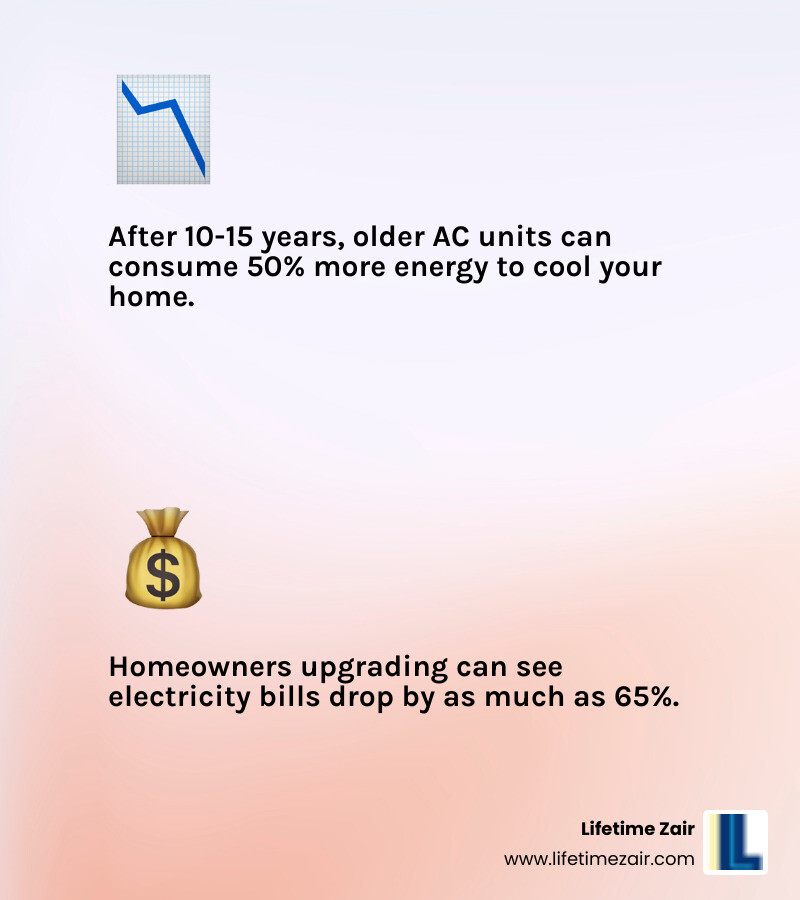
Many people find themselves in a tough spot with an old, struggling AC. For example, it’s not uncommon for homeowners to see their electricity bills drop significantly—sometimes by as much as 65%—after upgrading their unit. Imagine the savings!
Outdated AC units work harder, leading to higher energy use and a bigger carbon footprint. They often struggle to keep up during hot spells, leaving parts of your home warm and uncomfortable.
Upgrading your AC system means saying goodbye to those worries. It’s an investment in your home’s future, ensuring reliable cooling for years to come.
Telltale Signs You Need an AC Unit Upgrade
Sometimes, our AC units try to tell us something, but we might not be listening. Like a grumpy old car, an aging air conditioner often gives off subtle (and sometimes not-so-subtle) hints that it’s nearing the end of its road. Recognizing these signs early can save us from a sweltering summer and unexpected repair bills.
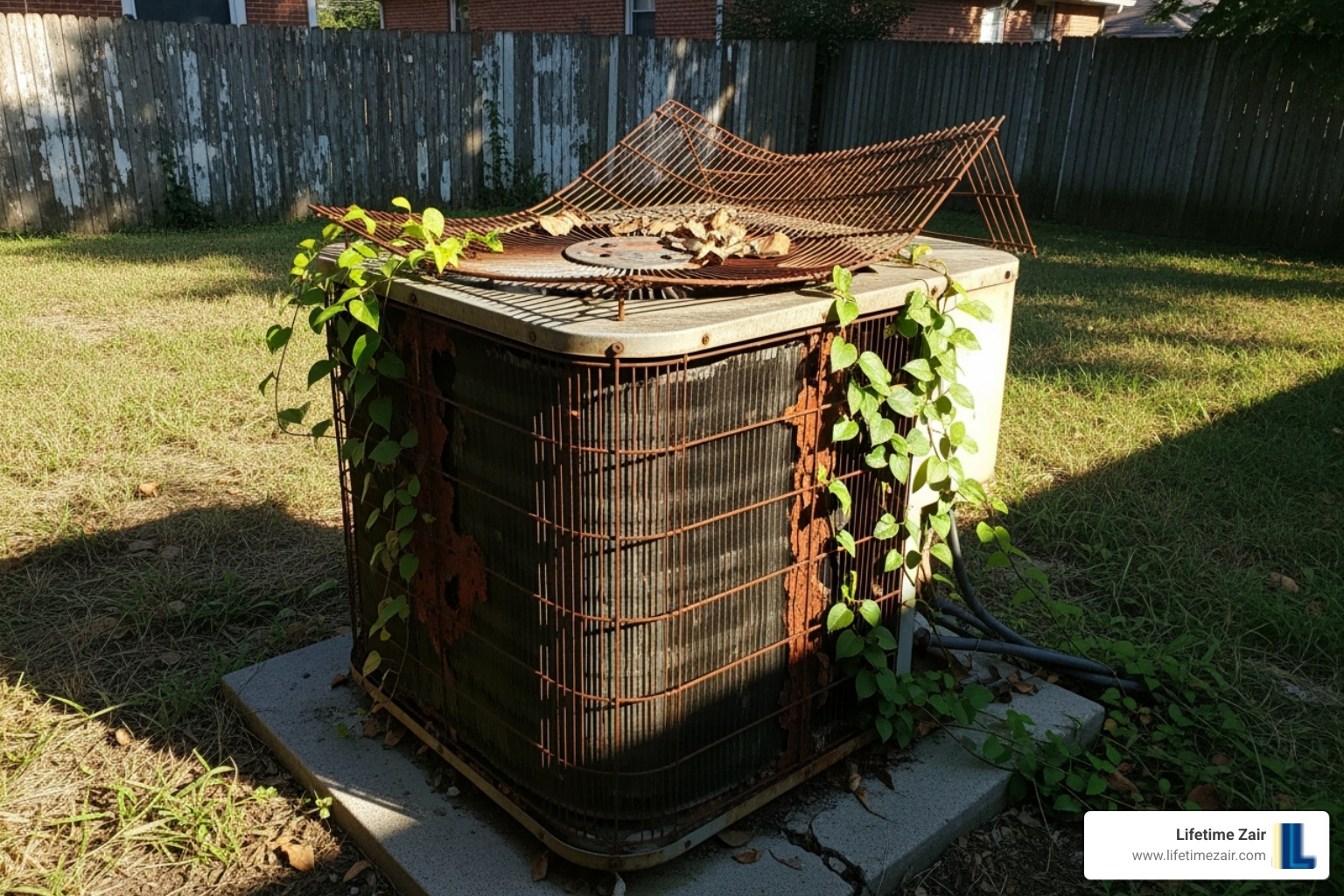
Are you noticing strange noises, inconsistent cooling, or a sudden spike in your energy bills? These aren’t just minor annoyances; they’re often clear indicators that it’s time to consider an AC unit upgrade. Let’s dive deeper into what these warning signs mean for your home comfort and wallet.
Your AC Unit’s Age and Lifespan
We often get asked, “How long do AC units last?” The average lifespan of an AC unit typically ranges from 10 to 15 years. While some units might soldier on for up to 20 years, their performance usually declines significantly after the 10-year mark. If your unit is nearing or has surpassed this age, its efficiency is likely compromised.
Older models are simply not built with the same energy-saving technologies as today’s units. They work harder to achieve the same cooling, leading to increased energy consumption and reduced cost-effectiveness. Upgrading to a newer model can drastically improve performance and energy efficiency, offering a refreshing change from your old workhorse. For more information on replacing older units, you can refer to insights from the ENERGY STAR program.
Frequent Breakdowns and the Repair-vs-Replace Rule
Is your HVAC technician on a first-name basis with your family? If your AC unit requires constant service calls and you’re paying for frequent repairs, it’s a strong signal that an AC unit upgrade is overdue. While a single repair might seem manageable, recurring issues can quickly add up, turning your cooling system into a financial drain.
To help homeowners make this tough decision, many HVAC professionals use a simple guideline. It suggests multiplying the estimated repair cost by the unit’s age in years. If the resulting number is high, it often indicates that replacement is the more economical choice in the long run. For example, a costly repair on an older unit is a much stronger indicator for replacement than an inexpensive repair on a relatively new system. This rule helps calculate the long-term value and determine when repair costs are no longer justified.
Skyrocketing Energy Bills
Have you noticed your energy bills climbing higher and higher, even when your usage habits haven’t changed? This is a classic symptom of an inefficient AC unit. As systems age, they lose their ability to efficiently convert electricity into cooling power. They have to work harder and run longer to maintain your desired temperature, consuming more energy in the process.
Modern high-SEER (Seasonal Energy Efficiency Ratio) AC units are up to 50% more efficient than older models. This means that an AC unit upgrade can lead to significant savings on your annual cooling bill, potentially up to 36%. Comparing your current utility bills to those from a few years ago can offer compelling evidence that your old unit is becoming a costly energy hog.
The R-22 Refrigerant Phase-Out
Another critical factor signaling the need for an AC unit upgrade is the type of refrigerant your system uses. If your AC unit still runs on R-22, commonly known as Freon, you’re facing a looming issue. R-22 is an ozone-depleting substance that has been phased out by environmental regulations. This means that new R-22 production and imports are banned, making the refrigerant increasingly scarce and expensive.
If your R-22 unit develops a leak, recharging it will be costly, if even possible. Upgrading to a new system that uses environmentally friendly refrigerants like R-410A or the even more efficient R-32 (which is replacing R-410A in new systems from 2025) is not just a smart financial move, but also a responsible environmental one. It ensures compliance with current regulations and aligns with our commitment to a greener future.
The Financial and Comfort Benefits of a Modern AC System
Deciding on an AC unit upgrade isn’t just about fixing what’s broken; it’s about investing in a healthier, more comfortable, and more financially sound home. The benefits extend far beyond simply having a working cooling system. Modern high-efficiency units bring a host of advantages, from significant energy savings and improved indoor air quality to a positive environmental impact and even increased home value. Let’s explore how a new AC system transforms your living space.
Open uping Significant Energy Savings with a High-SEER System
When we talk about AC efficiency, we often mention SEER ratings. SEER stands for Seasonal Energy Efficiency Ratio, and it’s a measure of how efficiently an air conditioner converts electricity into cooling power over an entire cooling season. The higher the SEER rating, the more efficient the unit.
As we discussed, modern high-SEER AC units are significantly more efficient than their older counterparts. Upgrading to a new high-efficiency air conditioner can save you up to 36% on your annual cooling bill. Imagine what you could do with those savings! This translates not only to lower energy bills but also to a reduced carbon footprint, contributing to a healthier planet. These high-efficiency units are designed to deliver more cooling with less energy, making them a smart choice for both your wallet and the environment.
Improved Home Comfort and Indoor Air Quality
Beyond the numbers, a modern AC unit upgrade brings a noticeable improvement in daily comfort. Older units often struggle to provide consistent cooling, leading to hot and cold spots throughout your home. Newer systems, especially those with variable-speed technology, offer precise temperature control, ensuring every room stays perfectly comfortable.
Humidity control is another major advantage. Older AC units can leave your home feeling clammy, even when the temperature is low. High-efficiency units are far better at dehumidifying the air, making your home feel cooler and more comfortable at higher thermostat settings.
And let’s not forget the peace and quiet. Many older units are notoriously loud, making it hard to relax. Modern AC units are engineered for quieter operation, sometimes reducing noise levels by 5-10 decibels. Plus, advanced filtration systems found in new units can significantly improve indoor air quality by capturing more dust, allergens, and other airborne particles, leading to cleaner, healthier air for your family.
The Long-Term Value of an AC Unit Upgrade
While the upfront cost of an AC unit upgrade might seem substantial, it’s crucial to view it as a long-term investment. The energy savings alone can help the unit pay for itself over its lifespan. Beyond that, a new, efficient AC system adds tangible value to your property, making it more attractive to potential buyers should you decide to sell.
Perhaps most importantly, an upgrade offers invaluable peace of mind. You’ll enjoy reliable cooling without the constant worry of breakdowns, unexpected repair bills, or the scramble to find a technician during a heatwave. It’s an investment in consistent comfort, lower operating costs, and the overall longevity of your home’s essential systems.
Smart Upgrades: Maximizing Your Investment
When considering an AC unit upgrade, it’s not always about a like-for-like replacement. This is an excellent opportunity to evaluate your home’s overall cooling needs and explore smart solutions that can maximize your comfort and efficiency. Sometimes, the best upgrade involves looking beyond just the outdoor unit and considering system-wide improvements.
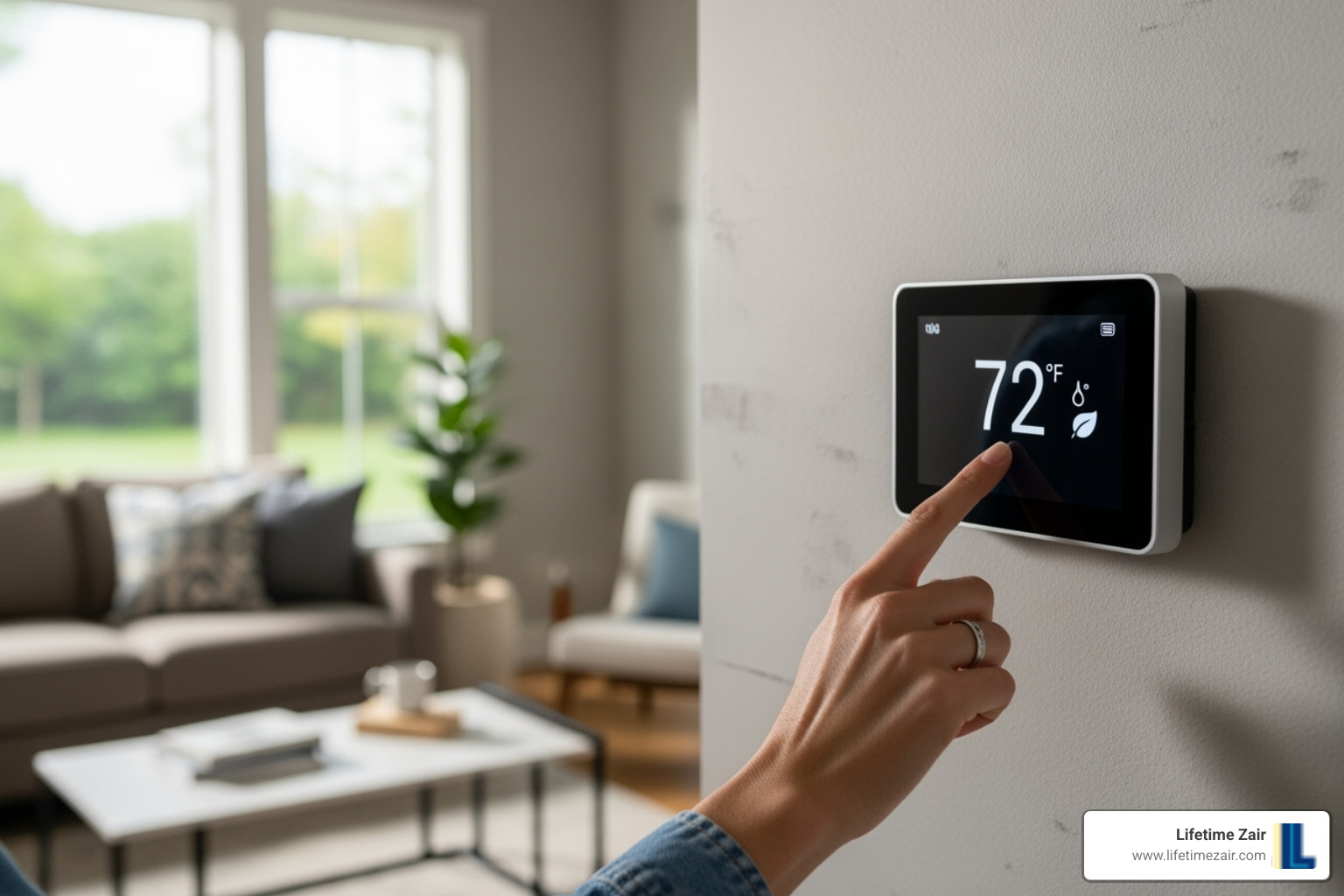
We believe in providing holistic home comfort, which means exploring options that best fit your home’s unique layout and your family’s lifestyle.
Central AC vs. Ductless Mini-Splits
The choice between a central AC unit and a ductless mini-split system often comes down to your home’s existing infrastructure and your specific cooling needs.
Central AC Units: These systems use a network of ducts to distribute cooled air throughout your entire home. They are ideal for homes that already have ductwork in place and offer consistent, whole-house cooling from a single outdoor unit.
Ductless Mini-Split Systems: As the name suggests, these systems don’t require ductwork. They consist of an outdoor unit connected to one or more indoor units mounted on walls or ceilings in specific rooms or zones. They are perfect for homes without existing ductwork, additions like sunrooms or garages, or for creating zoned cooling in specific areas. Ductless systems are often more energy-efficient than central air because they cool spaces directly, eliminating energy loss through leaky ducts.
Here’s a quick comparison:
| Feature | Central AC Units | Ductless Mini-Split Systems |
|---|---|---|
| Performance | Whole-house cooling, consistent temperatures | Zoned cooling, precise temperature control |
| Installation | Requires existing ductwork, more complex retrofit | No ductwork needed, flexible indoor unit placement |
| Best Use Cases | Homes with existing ductwork, new constructions | Additions, homes without ducts, zoned cooling |
The Advantage of a Hybrid System
For those of us living in climates with hot summers and milder winters, like here in Texas, a hybrid HVAC system can be a game-changer. These intelligent systems combine the best of both worlds: a high-efficiency heat pump with a traditional furnace. The heat pump handles both heating and cooling during milder weather, offering exceptional energy efficiency. When temperatures drop during a winter cold snap, the system automatically switches to the furnace for powerful, reliable performance. This automatic switching ensures optimal efficiency year-round, adapting to our variable weather conditions and providing a comfortable home without breaking the bank. Many homeowners who’ve opted for hybrid systems express how much they love the flexibility and year-round savings they offer.
Beyond the Unit: System-Wide Improvements
An AC unit upgrade isn’t just about the main equipment. We can significantly improve your home’s comfort and efficiency by integrating smart technology and optimizing existing infrastructure.
- Smart Thermostats: These clever devices connect to your home internet, allowing you to control your AC remotely from your smartphone. They can learn your schedule, adjust temperatures automatically, and even provide insights into your energy usage. Smart thermostats can reduce energy usage by up to 15%, making your life easier and your energy bills lower.
- Zone Control Systems: Imagine being able to set different temperatures for your bedroom, living room, and basement. Zone control systems, installed in your ductwork, allow for individual temperature adjustments in different areas of your home. This means you only cool the spaces you’re using, saving energy and ensuring personalized comfort.
- Ductwork Inspection and Sealing: Your ducts are the pathways for cooled air, and if they’re leaky or poorly insulated, you’re losing significant amounts of energy. Improper HVAC installation can reduce system efficiency by up to 30%. Sealing or replacing leaky ducts can restore up to 30% of lost airflow, ensuring that the cooled air actually reaches its intended destination. For more insights on how ductwork affects efficiency, refer to information from Energy.gov.
Making Your AC Upgrade Affordable
We understand that an AC unit upgrade is a significant investment. That’s why we’re committed to helping you explore all available options to make this essential home improvement accessible and manageable. Between government initiatives and flexible payment solutions, there are numerous ways to ease the financial burden and start enjoying a more comfortable, efficient home sooner rather than later.

Tapping into Government Rebates and Credits
Homeowners can often take advantage of various government programs and local utility rebates designed to encourage energy-efficient upgrades. These programs may offer substantial rebates for energy-smart improvements, including high-efficiency HVAC systems. These incentives can significantly lower the initial investment, making an AC unit upgrade much more attractive. Eligibility typically requires homeownership and meeting specific program requirements. Additionally, federal tax credits may be available to offset a percentage of project costs for qualifying HVAC equipment and home envelope improvements. We can help you steer these programs to ensure you receive all the benefits you’re entitled to.
Flexible Financing and Payment Options
Making a large home investment manageable is key. We believe that everyone deserves to experience optimal home comfort, which is why we offer flexible financing and payment options for your AC unit upgrade. Spreading out the cost into manageable monthly payments can help you avoid depleting your savings or relying on high-interest credit cards.
Here are some benefits of consumer financing for home projects:
- Preserve Cash Flow: Keep your savings intact for other needs or emergencies.
- Avoid High-Interest Debt: Unlike many credit cards with average interest rates around 19.1%, financing options can offer much lower APRs, sometimes even 0% for eligible customers.
- Clear Terms: Our financing partners provide transparent terms with no hidden fees or prepayment penalties.
- Quick and Easy Application: Get approval in minutes, often with a soft credit check that doesn’t impact your credit score.
- Immediate Comfort: Don’t wait for your AC to completely fail. Get the comfort you need now and pay over time.
We partner with trusted providers to ensure you have access to convenient and affordable financing solutions.
Finding the Right Partner for Your Installation
An AC unit upgrade is a complex process that requires specialized knowledge and tools. Choosing the right HVAC professional for your installation is just as important as choosing the right unit. Proper installation is crucial for maximizing your new system’s efficiency, ensuring its longevity, and maintaining your warranty.
Why Professional Installation Matters
When it comes to something as vital as your home’s cooling system, DIY simply won’t cut it. Here’s why professional installation is non-negotiable:
- Proper Unit Sizing: An experienced technician will perform a Manual J load calculation to determine the precise cooling capacity (BTU) your home needs. An improperly sized unit, whether too big or too small, will lead to inefficiency and discomfort.
- Maximizing System Efficiency: Even the most efficient unit won’t perform optimally if it’s not installed correctly. Improper HVAC installation can reduce system efficiency by up to 30%. Professionals ensure everything is perfectly calibrated for peak performance.
- Safety and Building Code Compliance: HVAC installations involve electrical work and refrigerant handling, which can be dangerous if not done correctly. Licensed professionals adhere to all safety protocols and local building codes, including obtaining necessary permits.
- Warranty Protection: Most manufacturers require professional installation for the warranty to be valid. A shoddy installation could void your warranty, leaving you responsible for future repair costs.
- Choosing a Licensed and Insured Professional: Always look for licensed, experienced, and well-reviewed HVAC contractors. They should provide transparent pricing and be able to answer all your questions.
The Role of Regular AC Maintenance
Once your new high-efficiency AC unit is installed, regular maintenance becomes your best friend. Just like a car needs oil changes, your AC needs annual tune-ups to stay in top shape. Regular maintenance plays a critical role in:
- Extending Your New Unit’s Lifespan: Consistent care prevents wear and tear, helping your system last for its full expected lifespan.
- Maintaining Peak Efficiency: Routine cleaning and checks ensure your unit continues to operate at its highest efficiency, helping you keep those energy savings. In fact, simply staying on top of maintenance can cut energy bills by 10-30%.
- Preventing Future Breakdowns: Technicians can spot potential issues before they become costly problems, saving you from inconvenient emergency repairs.
- Keeping Your Warranty Valid: Many manufacturers require proof of annual maintenance to keep your warranty valid.
We recommend regular filter changes and annual professional tune-ups to keep your new investment running smoothly for years to come.
Conclusion
Making an AC unit upgrade is a significant decision, but as we’ve explored, it’s one that consistently pays off. From addressing the telltale signs of an aging, inefficient system to open uping substantial energy savings and enhancing your home’s comfort, the benefits are clear. You’ll enjoy consistent cooling, cleaner indoor air, quieter operation, and the peace of mind that comes with a reliable, modern system.
Beyond personal comfort, an AC unit upgrade is a smart financial move, increasing your property value and often paying for itself through reduced energy bills. With government rebates and flexible financing options, this essential home improvement is more accessible than ever.
We are committed to providing you with the highest quality HVAC services. Our team of licensed professionals ensures proper installation, maximizing your system’s efficiency and longevity. Don’t let an outdated AC unit compromise your comfort or drain your wallet. It’s time to invest in your home’s future.
Schedule your AC upgrade consultation today and find the difference a new, high-efficiency AC unit can make for your home.