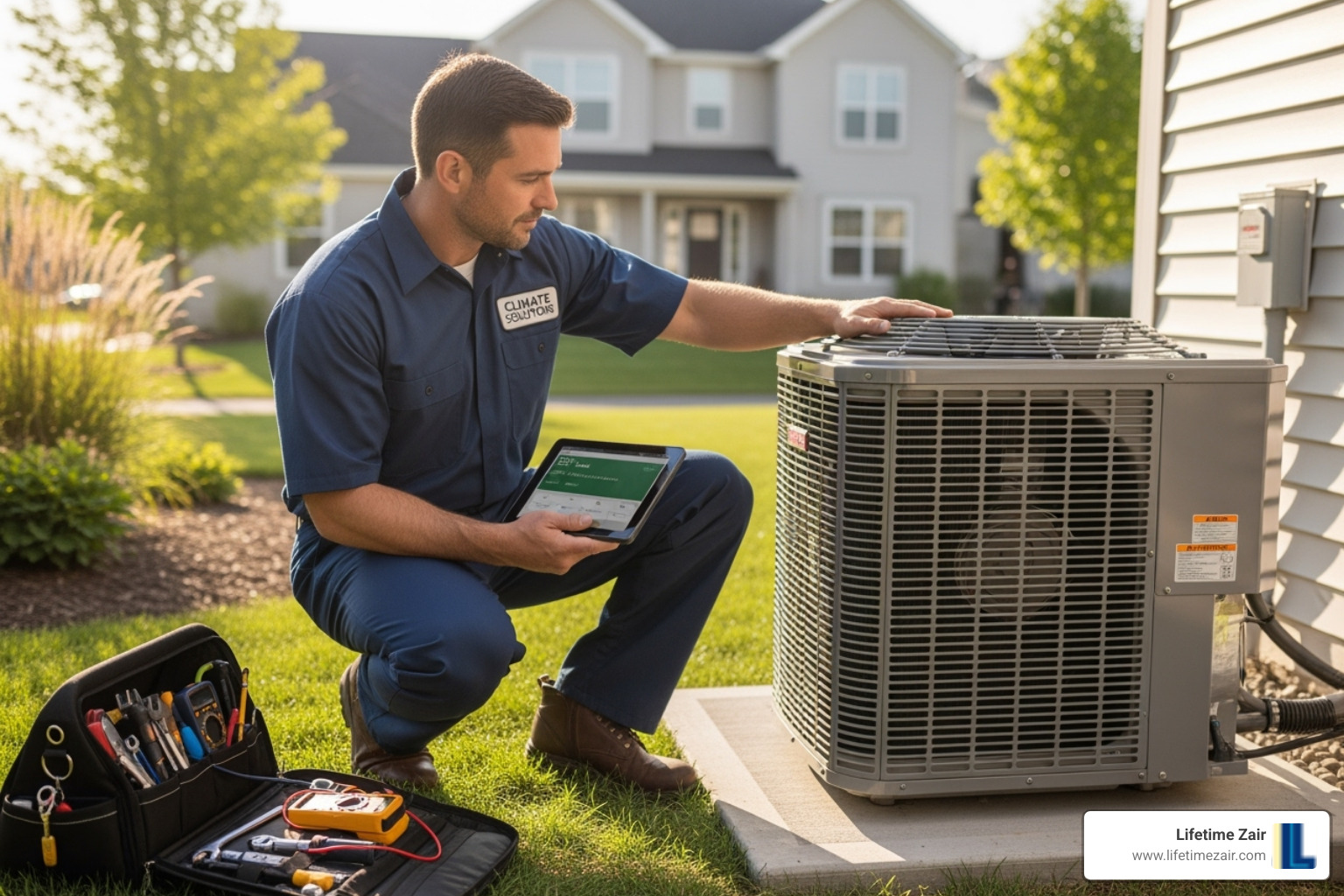
Why Expertise Matters for Your Home’s Comfort
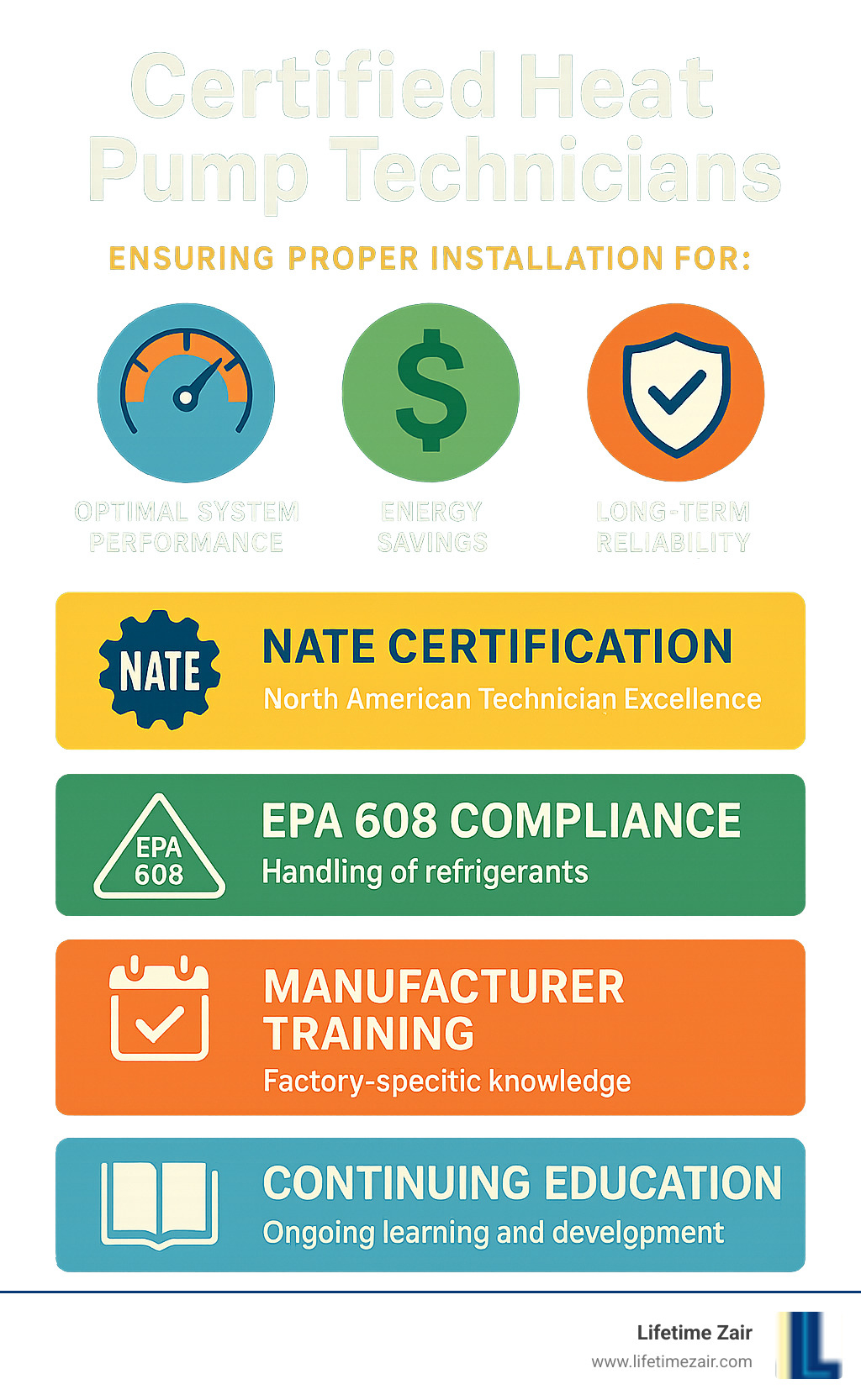
Certified heat pump technicians are HVAC professionals with industry-recognized credentials like NATE and EPA 608 certification. These demonstrate their expertise in installing, servicing, and repairing heat pump systems safely and efficiently.
What to look for in certified heat pump technicians:
- NATE Certification – North American Technician Excellence certification with 90%+ success rates
- EPA 608 Certification – Required for handling refrigerants safely and legally
- Manufacturer Training – Factory-specific knowledge for different heat pump brands
- Continuing Education – 16 hours every two years to maintain NATE certification
- Real-world Experience – Minimum 2 years experience for NATE certification eligibility
When your heat pump needs installation or repair, the technician you choose makes all the difference. Heat pumps are complex systems that heat and cool by moving heat, requiring specialized knowledge beyond basic HVAC work.
Poor installation can cost you thousands in lost efficiency, even with high-quality equipment. Certified technicians understand the science of proper sizing, refrigerant handling, and system optimization, which protects your investment.
With the potential to reduce energy bills by up to 30%, the stakes are high. This efficiency is only achieved when your system is installed and maintained by a true professional.
The Gold Standard: What Qualifications to Look for in a Heat Pump Technician
Choosing an HVAC professional can be confusing, with terms like NATE and EPA. Understanding these qualifications is key to your peace of mind. Certified heat pump technicians have gone beyond basic licensing to prove their deep understanding of complex heat pump technology.

These certifications signal that a technician has met tough industry standards. This means the person working on your system has the expertise needed for precise installations, excellent service, and reliable repairs. This dedication leads to better heat pump performance, increased energy efficiency, and a longer life for your system. It’s how we ensure you get top-notch service, every time.
Understanding NATE Certification and Its Importance
NATE (North American Technician Excellence) certification is the gold standard for HVACR professionals. This independent certification isn’t a simple test; it’s designed for technicians with at least two years of real-world experience, proving their practical, working knowledge. The tests, created by industry experts, cover a wide range of topics, including specialized areas like heat pumps.
A NATE-certified technician means fewer frustrating callbacks, installations done right the first time, and better energy savings for you. Their knowledge is thoroughly tested, promising that their expertise will save you both time and money. To maintain this certification, technicians must earn 16 Continuing Education Hours (CEHs) every two years or retake their specialty exam. This ensures their knowledge stays current with the newest industry advances. We highly recommend professionals who show this commitment. You can find out more about the steps technicians take by checking out More about NATE Certification Pathways.
Essential EPA 608 Certification
Another crucial credential is the EPA 608 certification. This is a federal requirement for any technician who handles refrigerants. Since refrigerants are powerful greenhouse gases, improper handling is harmful to the environment and illegal.
The EPA 608 certification ensures technicians understand the correct methods to handle, recover, recycle, and dispose of refrigerants. For homeowners, this certification provides peace of mind in a few ways:
- Environmental Protection: Your technician is committed to practices that are good for our planet.
- Safety Compliance: They follow strict safety rules to protect themselves, your home, and the environment.
- Technician Responsibility: It holds them accountable to federal laws, ensuring a professional and legal approach.
When we send a technician to your home, you can be sure they have this critical certification.
The Value of Manufacturer-Specific and Factory Training
While NATE and EPA 608 certifications provide a strong foundation, the HVAC industry is constantly evolving. Manufacturer-specific and factory training ensures technicians are up-to-date on the latest technologies and models. This training involves detailed classes directly from the companies that make the heat pump systems.
The benefits of this training are huge:
- Brand Expertise: They gain deep knowledge of specific product lines, allowing for more accurate problem-solving.
- Advanced Features: They learn how to optimize the special features of your particular heat pump model.
- Warranty Compliance: Proper installation and service by factory-trained technicians are often required to keep your warranty valid.
- Faster, More Accurate Service: Knowing a brand’s equipment inside and out means quicker and more effective solutions.
This level of detailed knowledge shows a technician’s dedication and ensures they are ready for today’s complex systems. We make sure our team is always trained on the newest heat pump systems, like those we install and service in the Dallas-Fort Worth area. You can visit Learn about our heat pump systems in McKinney to see the types of systems we handle.
How Certified Heat Pump Technicians Ensure Optimal Performance
Your heat pump is a sophisticated system, but its performance depends entirely on the expertise of your technician. A certified pro ensures your system saves you money, while improper handling can lead to disappointment and headaches.
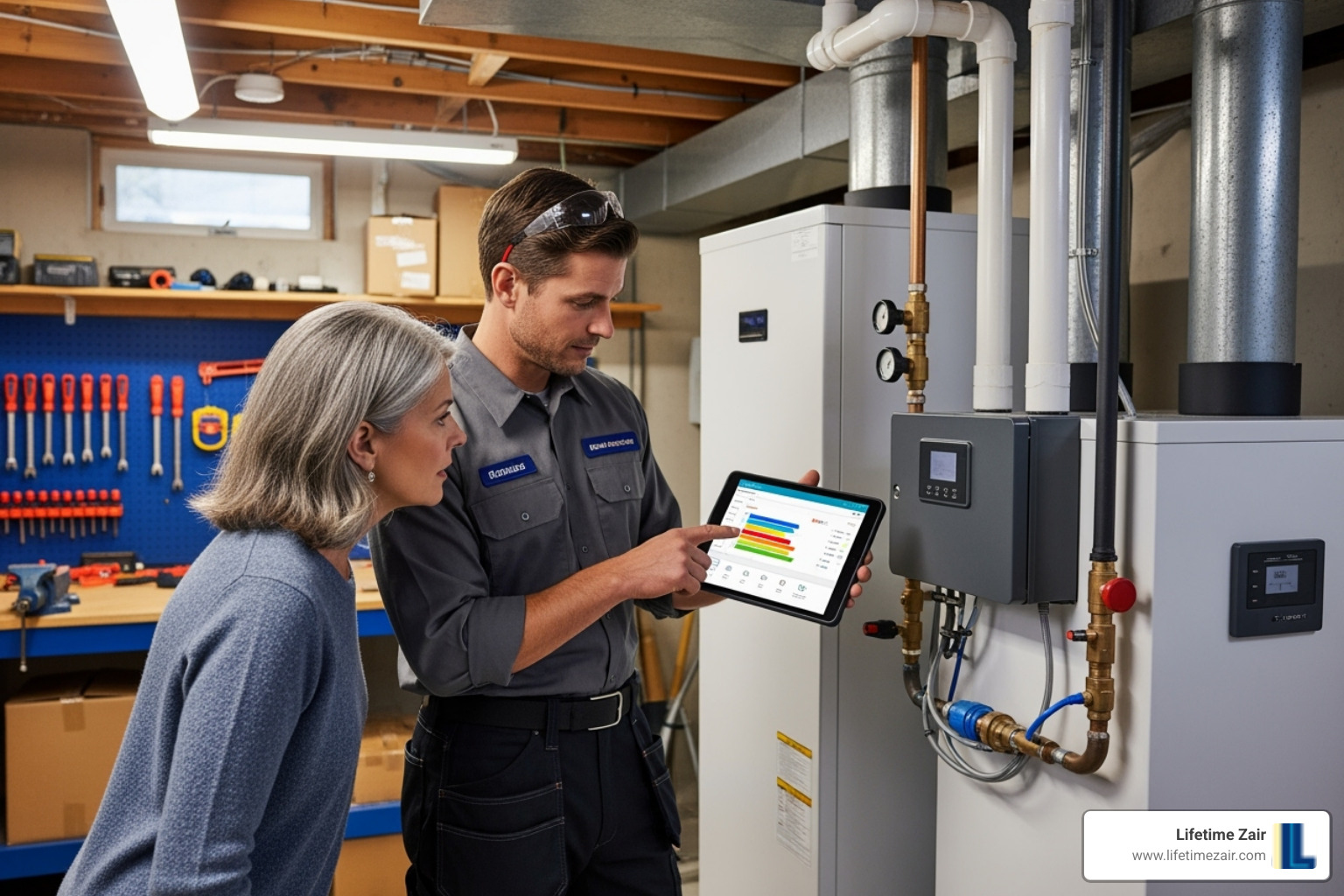
Certified heat pump technicians understand the science behind comfort. They don’t just hook up equipment; they carefully plan every step, from choosing the right size system to fine-tuning its performance. This attention to detail means your heat pump will run efficiently, keeping your energy bills low and your home comfortable for years.
The Science of Sizing: Manual J, S, and D Explained
Properly sizing a heat pump is critical. A system that’s too big will cycle inefficiently, fail to control humidity, and wear out prematurely. A system that’s too small will run constantly without ever reaching the desired temperature. Certified heat pump technicians use three industry-standard calculations—Manual J, S, and D—to get it right.
- Manual J Load Calculation is the first step. A technician analyzes details like square footage, insulation, windows, and home orientation to determine your exact heating and cooling needs, accounting for local climate factors.
- Manual S Equipment Selection uses the Manual J results to select the perfect heat pump for your home. This precise matching ensures better comfort, lower energy bills, and a longer system lifespan.
- Manual D Duct Design ensures the perfectly sized unit can deliver comfort to every room by designing a duct system with balanced airflow.
These rigorous standards guide every installation we perform. To help you prepare, check out our guide on Prepare for Your Heat Pump Installation.
Expertise Across Different Heat Pump Systems
Different types of heat pumps suit different homes, and certified heat pump technicians know which one fits your needs.
- Air-Source Heat Pumps are the most common type, great for most Dallas-area homes. They are cost-effective and connect to existing ductwork, but proper refrigerant charging and system balancing are key.
- Ductless Mini-Split Systems offer flexibility for homes without ductwork or for zoning specific areas. Installation requires strategic placement of indoor units and running refrigerant lines through walls.
- Hybrid or Dual-Fuel Systems combine a heat pump with a gas furnace for maximum efficiency. They automatically switch to the most cost-effective heating source, but installation requires expertise in both technologies.
Each system has unique installation, maintenance, and repair needs. Our technicians understand these differences, ensuring they approach your system with the right knowledge.
Comprehensive Installation, Service, and Repair Skills for Certified Heat Pump Technicians
The expertise of certified heat pump technicians covers every aspect of your system’s life.
- Professional Installation: Technicians carefully position units for optimal airflow and minimal noise, ensure proper drainage, and make electrical connections that meet code. Every installation includes precise refrigerant charging and thorough testing.
- Advanced Diagnostic Tools: They use digital manifold gauges, refrigerant analyzers, and diagnostic tablets to pinpoint problems quickly and accurately, meaning faster repairs.
- Preventive Maintenance Expertise: During service visits, technicians check refrigerant levels, clean coils, inspect connections, and test performance to spot early warning signs and prevent major breakdowns.
- Skilled Troubleshooting: When issues arise, certified technicians understand the complex interactions between components. They can diagnose problems with systems using newer refrigerants like R-410A, which requires specific handling.
When your comfort is on the line, you need technicians who can fix problems right the first time. If you’re experiencing issues, don’t wait—Call Us for Heat Pump Repair.
Hiring Smart: How to Find and Verify Your Technician
Finding a trustworthy certified heat pump technician can feel overwhelming, but it’s a manageable process. With the right approach, you can feel confident about who you hire to work in your home.
We’re here to walk you through how to find and verify the credentials of a top-notch heat pump technician. By the end of this section, you’ll know what questions to ask and where to look.
Where to Find Qualified Certified Heat Pump Technicians
Finding qualified certified heat pump technicians is easier than ever. Use these reliable resources to locate professionals with proven expertise.
- Official certification directories: NATE maintains an online database where you can search for certified technicians in your area. This is a direct line to verified professionals. You can easily Find a Contractor with NATE-Certified Technicians.
- Professional associations: These organizations often hold their members to higher standards and maintain member directories.
- Referrals: Ask neighbors, friends, and family for recommendations. They can provide invaluable insights into a technician’s reliability and quality of work.
- Direct company contact: When you contact companies, listen for how they talk about their technicians’ qualifications. Reputable companies will proudly mention their certifications and ongoing training.
Verifying Credentials and Asking the Right Questions
Once you have a list of potential companies, it’s time to verify their credentials. This is a smart step to protect your investment.
- Verify NATE certification: Ask for a technician’s NATE ID number and check it on the NATE website to confirm their status and specialties.
- Check licensing: Legitimate HVAC contractors should hold proper licenses for your area. Ask to see proof.
- Confirm insurance: Ensure the company carries both liability insurance and workers’ compensation to protect you. Ask for proof of insurance.
Now, ask questions that separate the pros from the pretenders:
- “What specific certifications do your heat pump technicians hold?” (Listen for NATE, EPA 608, and manufacturer training.)
- “How do you determine the correct size heat pump for my home?” (The answer should involve Manual J load calculations.)
- “What is your process for installation, service, or repair?”
- “Do you offer a warranty on your work?”
- “Can you explain the differences between various heat pump types?”
- “Do you provide transparent pricing and written estimates?”
For more guidance on installation, see our list of Questions for Heat Pump Installation.
Asking these questions isn’t being difficult—it’s being a smart homeowner. The right technician will appreciate your thoroughness and answer your questions completely.
Frequently Asked Questions about Heat Pump Technicians
We get these questions all the time from homeowners who want to understand whether hiring certified heat pump technicians is really worth it. Let’s explore the most common concerns and give you the straight answers you need.
How much more does it cost to hire a certified technician?
While a certified technician might have a slightly higher upfront cost, the long-term value is significant. An uncertified technician may charge less per hour, but mistakes can lead to repeated service calls and higher costs over time.
- Fewer callbacks: A properly trained technician gets it right the first time, saving you time and money.
- Energy savings: A properly sized and installed system runs at peak efficiency, which translates directly to lower monthly energy bills.
- Proper installation benefits: Correct installation protects your entire investment. An incorrectly installed heat pump will fail sooner and cost more to operate.
- Avoiding costly future repairs: Quality work prevents the shoddy mistakes that lead to expensive breakdowns down the road.
It’s about protecting your investment and your peace of mind. The small difference in upfront cost pales in comparison to the long-term value of doing things right.
Do I need a certified technician for simple maintenance?
Yes, you absolutely need a certified technician for proper heat pump maintenance. While homeowners can change filters, professional maintenance involves technical tasks that require expertise.
- Early issue detection: During routine maintenance, certified heat pump technicians spot small problems before they become major failures.
- Refrigerant level checks: Your heat pump needs a precise amount of refrigerant to work efficiently. Only technicians with EPA 608 certification can legally and safely handle refrigerants.
- Ensuring peak efficiency: Technicians perform tasks like cleaning coils, tightening electrical connections, and calibrating controls that are essential for efficiency and reliability.
- Protecting your investment: Many manufacturers require proof of professional maintenance to keep your warranty valid. Skipping professional tune-ups could void your coverage.
Think of professional maintenance like a dental checkup: you brush at home, but you need a professional to catch problems early and keep everything healthy.
How long does it take to become a certified heat pump technician?
The path to becoming a certified heat pump technician is extensive, which ensures homeowners receive service from a true expert.
The journey typically involves:
- Formal training programs: These programs at vocational schools or community colleges can last from several months to two years, covering everything from electrical work to refrigeration cycles.
- Hands-on experience: Most certifications, especially NATE, require at least two years of real-world experience before a technician can even take the specialty exams.
- Rigorous exams: The NATE Heat Pump Specialty Exam, for example, covers a wide range of complex topics that require a deep understanding of how heat pumps work.
- Continuing education: NATE requirements include 16 hours of continuing education every two years to maintain certification, ensuring technicians stay current.
You can get a sense of the depth involved by looking at an Example of a 40-Hour Heat Pump Training course. When you hire a certified technician, you’re getting someone who has invested years in their craft.
Conclusion: Invest in Peace of Mind with a Certified Pro
Your heat pump is an engineering marvel that can reduce energy bills by up to 30%, but only when installed and serviced by certified heat pump technicians. Their expertise is the key to open uping your system’s full potential.
We’ve covered the importance of NATE, EPA 608, and manufacturer-specific certifications, which are the hallmarks of a true professional. These qualifications ensure your technician can handle today’s sophisticated systems. From precise Manual J sizing to comprehensive repair skills, they bring science and experience together.
The choice between a certified professional and an uncertified one is about protecting your investment and your family’s comfort. When you choose a certified heat pump technician, you’re investing in:
- Reliability: Fewer surprise breakdowns and consistent performance.
- Efficiency: Lower monthly energy bills and a smaller environmental footprint.
- Safety: Proper handling of refrigerants and electrical components.
- Longevity: Properly installed and maintained heat pumps can last 10 to 20 years.
- Peace of Mind: Knowing your home’s comfort is in expert hands.
At Lifetime Zair, we understand that your family’s comfort can’t be left to chance. Our certified heat pump technicians represent the highest standards in the industry, bringing years of training and experience to every job.
We also believe essential home comfort services should be accessible. That’s why we offer financing options and promotions to help fit the best heat pump solutions into your budget.
Don’t let another day pass wondering if your heat pump is performing as it should. Whether you need a new installation, repair, or professional maintenance, we’re here to help.
Schedule your professional heat pump installation in Dallas, TX today and find what the Lifetime Zair difference means for your home’s comfort.