Why Smart Shopping for AC Installation Matters
AC installation deals can save you thousands on your home comfort investment, but knowing where to look and what to avoid makes all the difference. With installation costs ranging widely and your family’s comfort on the line, finding the right deal isn’t just about the lowest price – it’s about getting quality work at a fair value.
Top AC installation deals to look for:
- Seasonal promotions – Spring and fall offer the best pricing
- Manufacturer rebates – Up to $650 from major brands like American Standard
- Utility company incentives – Local programs can add hundreds in savings
- Federal tax credits – Energy-efficient systems qualify for significant credits
- 0% financing deals – Spread costs over 48-60 months with no interest
- Bundle offers – Combined AC and furnace packages often include extra savings
The average home in places like Florida spends over 40% of their utility bills on HVAC. With most AC units lasting only 7-11 years in hot climates, replacement is inevitable. But here’s the thing – quotes can vary wildly. Our research shows estimates ranging from $6,000 to $20,000 for similar work.
Smart homeowners know the secret: The best deals combine fair pricing, quality equipment, professional installation, and solid warranties. It’s not about finding the cheapest option – it’s about maximizing value while avoiding the costly mistakes that come with cut-rate work.
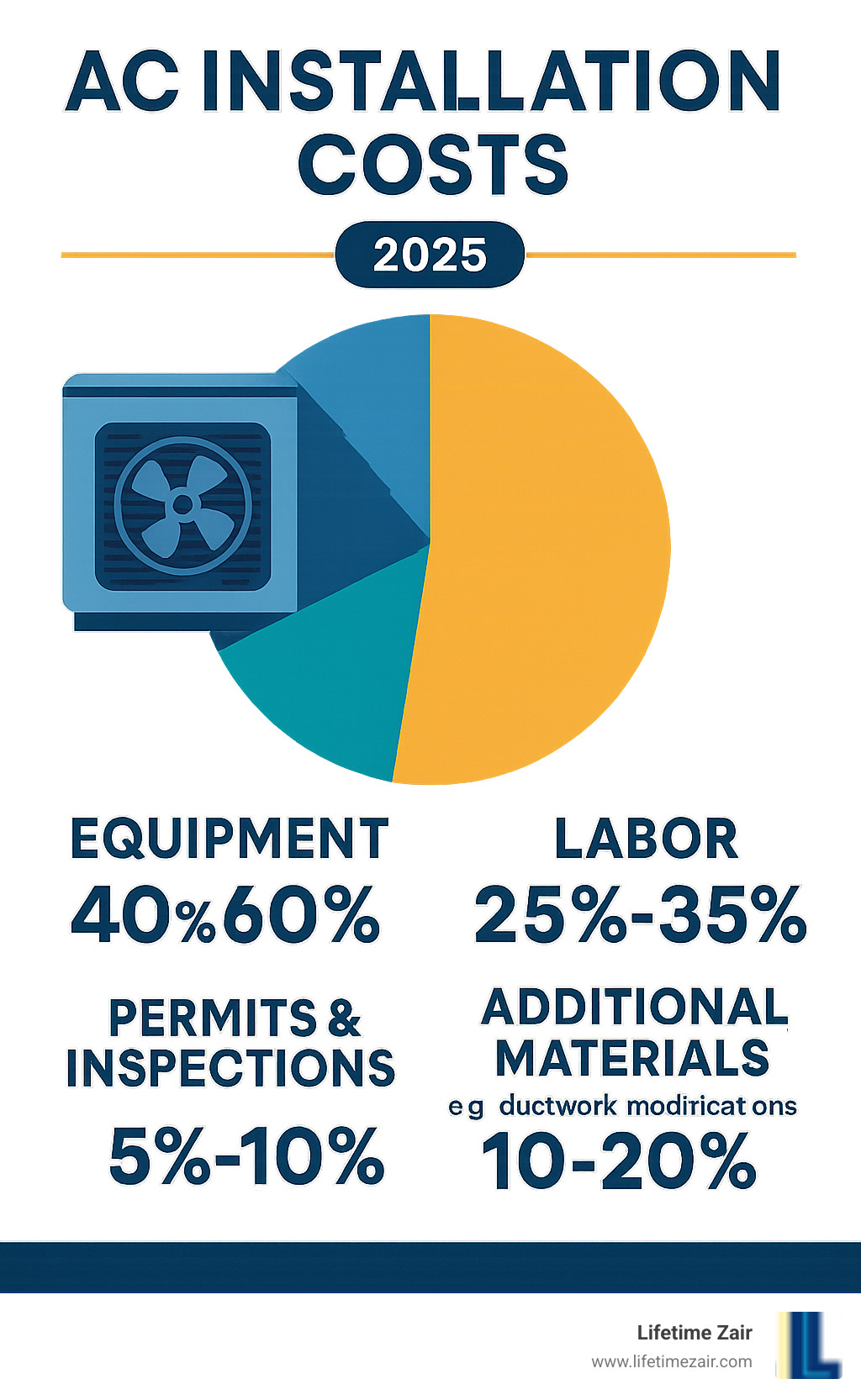
Decoding the Price Tag: What Influences AC Installation Costs?
Understanding what drives installation costs helps you spot genuine AC installation deals and avoid overpaying. Several key factors influence the final price tag.
The unit size, measured in tons or BTUs, is a primary cost factor. A larger home requires more cooling power, meaning a bigger, more expensive unit. Most homes need a 2- to 5-ton unit. The SEER rating measures energy efficiency; a higher rating means lower electricity bills but a higher upfront cost.
Home size impacts unit capacity and installation complexity. The ductwork condition is also critical; old, leaky, or improperly sized ducts may need repair or replacement, adding to the cost. Labor costs depend on your location and the installation’s complexity. A simple replacement costs less than a job requiring new ductwork or navigating difficult access points. The system type—central air, heat pump, or ductless mini-split—also affects the price due to different installation requirements. For more details on getting the right size for your home, check out our guide on correctly sized AC units.
Factors You Control
You can control several cost factors, making these key areas to find value in AC installation deals.
Energy efficiency is your biggest opportunity to influence long-term costs. While high-SEER units have a higher initial cost, they significantly cut long-term energy bills, which can account for nearly half of your home’s utility usage.
Unit brand quality gives you options. Choosing between basic and premium brands affects cost. We work with trusted manufacturers to help you balance quality and budget.
Warranty length is worth considering. Extended coverage or maintenance plans can offer significant savings on future repairs.
Smart thermostat integration adds to the initial cost but can lower monthly bills by optimizing performance.
Factors You Don’t Control
Some costs are fixed based on your home and location. Understanding them helps set realistic budget expectations.
Home square footage dictates the required cooling capacity, directly impacting equipment and installation costs.
Existing ductwork can be a wild card. During an assessment, we might find damaged or outdated ducts. Addressing these issues is crucial for the new system’s performance.
Your climate zone determines how hard your AC must work, influencing the required system type and capacity.
Local permit fees and building codes are non-negotiable costs for a safe, compliant installation. We handle the paperwork, and the fees are included in the total cost.
The key is focusing on what you can control while being realistic about fixed costs to find the best value in AC installation deals.
How to Find the Best AC Installation Deals and Savings
Finding the best AC installation deals is about knowing when and where to look. The effort pays off.
Timing is everything. Shop during the shoulder seasons (spring and fall) when contractors are less busy to find the best prices. If your current system can last, waiting can lead to significant savings.
Manufacturer rebates on energy-efficient equipment can provide substantial savings. These offers change seasonally, so check for current deals when you’re ready to buy.
Utility company incentives are common for upgrades to energy-efficient systems. Power companies often offer rebates or bill credits to reduce strain on the grid.
Federal tax credits, updated by the Inflation Reduction Act, can significantly reduce your tax bill when you install qualifying energy-efficient systems. For details, see the Information on federal tax credits on the IRS website.
Zero percent financing deals allow you to spread the cost over 48 to 60 months without interest, making a large expense more manageable.
Bundle offers for both heating and cooling systems can provide extra savings, but ensure the package offers genuine value.
We stay on top of all these opportunities. Our promotions change regularly, so be sure to Check our current promotions to see what savings are available right now.
Spotting Genuine vs. Deceptive AC Installation Deals
Not all AC installation deals are what they seem. Here’s how to spot deceptive offers.
Bundled deals should save you money on equipment you need. Be wary of “free AC” offers, as the cost is often hidden in an inflated furnace price or expensive add-ons.
“Free” offers often conceal costs. “Free” installation may mean a higher equipment price, while “free” maintenance could require an overpriced service contract. Always clarify the total cost.
Hidden costs can derail a low quote. A legitimate estimate is comprehensive, including permits, electrical work, duct modifications, and old unit disposal.
Inflated pricing followed by a large discount to match competitors is a deceptive tactic.
Here are the red flags to watch for:
- High-pressure tactics demanding immediate decisions
- Quotes without a thorough home inspection
- Cash-only payment requirements
- Vague warranties that don’t specify coverage details
- Prices dramatically higher or lower than other reputable quotes
- Reluctance to provide itemized cost breakdowns
Trust your instincts. A reputable contractor will be transparent and give you time to decide.
Leveraging Financing and Payment Plans
Financing can make a new AC system affordable by turning a large upfront cost into manageable monthly payments.
Zero percent APR offers let you finance a new system over 48 to 60 months with no interest (with approved credit), making premium equipment more accessible.
Low monthly payment plans can also be a good option, but always understand the terms before signing.
Spreading out costs makes financial sense, as monthly energy savings from a new, efficient unit can help offset the payment.
Making upgrades affordable is the goal of good financing, allowing you to install a high-efficiency system you might not otherwise consider.
When considering financing, read the fine print on total cost, promotional periods, and prepayment penalties. We provide transparent financing options to help you make the best choice.
Ready to explore your financing options? Learn about HVAC financing and find how we can make your comfort upgrade surprisingly affordable.
Is It Time for an Upgrade? 7 Signs You Need a New AC
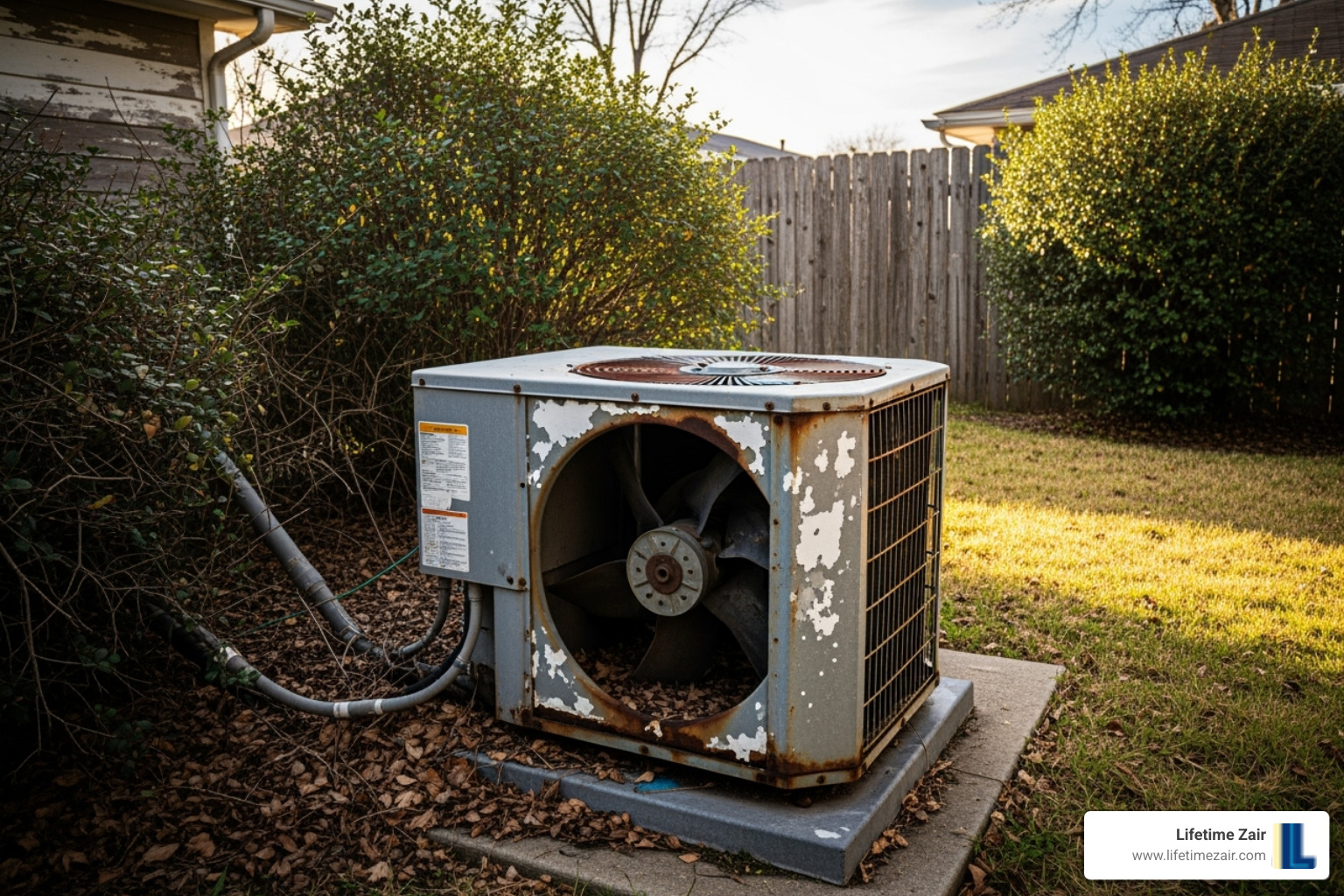
Waiting for your AC to break down on the hottest day means missing out on the best AC installation deals and scrambling for emergency service. Your AC will show warning signs before it fails. In hot climates like Texas, AC systems typically last 7 to 11 years. Beyond that, efficiency and reliability decline.
Your AC’s age is a key indicator. If it’s over a decade old, it’s likely less efficient than modern units, costing you more on energy bills.
Frequent repairs are a clear sign. If annual repair costs approach 50% of a new system’s price, replacement is more cost-effective.
Rising energy bills without another cause suggest your AC is losing efficiency and working harder to cool your home.
Inconsistent cooling, with hot and cold spots throughout your home, indicates your system is struggling due to issues like a failing compressor or improper sizing.
Strange noises and smells are warnings. Grinding or squealing can mean worn parts, musty smells suggest mold, and burning smells indicate dangerous electrical problems.
If your system uses R-22 refrigerant (Freon), replacement is wise. R-22 has been phased out and is now extremely expensive and difficult to source for repairs.
Excessive humidity means your AC isn’t dehumidifying properly. A sticky, clammy home environment can lead to mold and comfort problems.
Upgrading to a new, energy-efficient system provides immediate benefits: lower utility bills, consistent comfort, quieter operation, and better air quality, all backed by a new warranty. Planning your replacement allows you to research the best AC installation deals without the pressure of an emergency. For detailed guidance on this decision, check out our resource: When to replace your HVAC unit.
Your Buyer’s Guide to a New Air Conditioner
When considering AC installation deals, choosing the right AC unit for your needs is as important as the price. An informed decision ensures lasting comfort and efficiency.
Correctly sizing your unit is the most critical step. An undersized unit runs constantly, while an oversized unit cycles improperly, causing poor dehumidification and wear. We perform a detailed Manual J Calculation, an industry standard that assesses square footage, insulation, windows, and climate to determine your home’s precise cooling needs. Never hire a contractor who skips this step. Next, consider the system types available and always pay close attention to the warranties offered.
Understanding SEER, SEER2, and Energy Efficiency
When reviewing AC installation deals, you’ll see SEER and SEER2 ratings. SEER (Seasonal Energy Efficiency Ratio) measures an AC’s efficiency; a higher rating means a more efficient unit. SEER2 is a newer, more accurate rating system introduced in 2023. The principle is the same: higher SEER2 means greater efficiency. In Texas, new installations must meet a minimum SEER rating of 14.
A higher SEER/SEER2 unit costs more upfront but leads to significant long-term savings on utility bills, especially in hot climates. We can help you find the right balance between initial cost and long-term savings. To help you estimate your potential savings, we offer a convenient tool: Use our SEER calculator.
Choosing Between System Types: Central, Heat Pumps, and Mini-Splits
Understanding different cooling systems is key to finding the right AC installation deals for your home.
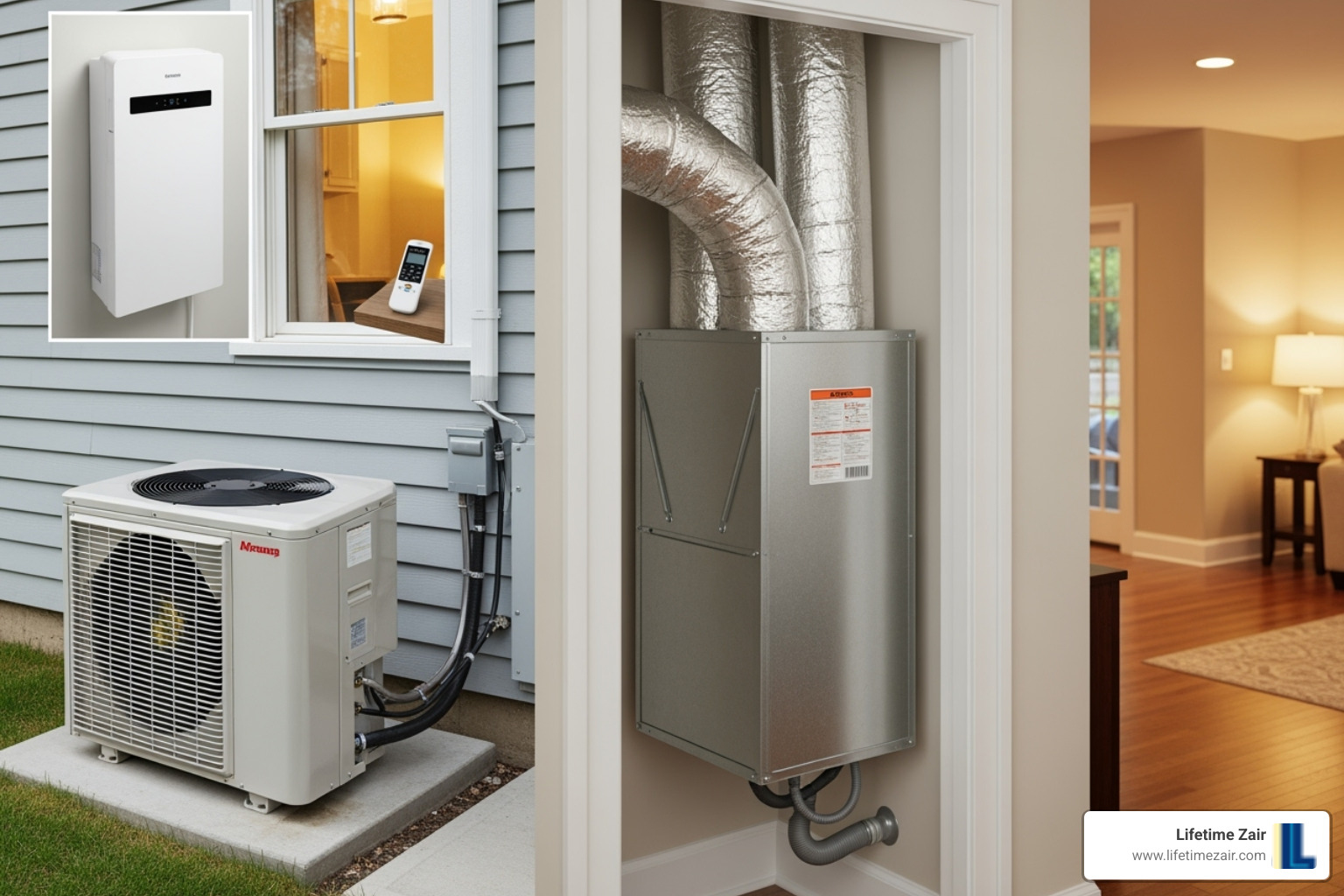
Central Air Conditioning Systems: Ideal for homes with ductwork, these systems use an outdoor condenser and indoor air handler to provide quiet, filtered, whole-home cooling.
Heat Pumps: These all-in-one systems cool your home in the summer and heat it in the winter by moving heat. They are highly energy-efficient, especially in mild climates like those in our Texas service areas (Lewisville, Dallas, Plano, Frisco, McKinney, Carrollton), and can significantly reduce heating costs.
Ductless Mini-Splits: These systems don’t require ductwork, using an outdoor unit connected to one or more indoor units. They are perfect for homes without ducts, additions, or for creating temperature zones. Benefits include high efficiency, quiet operation, and flexible installation.
Here’s a quick comparison of Central Air vs. Ductless Mini-Splits:
| Feature | Central Air Conditioning | Ductless Mini-Splits |
|---|---|---|
| Ductwork Required | Yes | No |
| Whole-Home Coverage | Yes, if properly sized and ducted | Yes, with multiple indoor units (multi-zone systems) |
| Zoning Capability | Limited, or requires complex zoning systems | Excellent, individual control per indoor unit |
| Installation | More invasive if ductwork needs to be installed/modified | Less invasive, requires only a small conduit hole |
| Aesthetics | Mostly hidden (ducts, outdoor unit) | Indoor units are visible, but often sleek |
| Energy Efficiency | High, especially with high SEER ratings | Very high, minimal energy loss through ducts |
| Best For | Homes with existing ducts, new constructions | Homes without ducts, additions, zoned comfort needs |
We specialize in the installation and maintenance of all these system types. If you’re considering a ductless solution, we invite you to learn more: Explore ductless mini-split systems.
Hiring the Right Pro: A Contractor Checklist
Choosing the right HVAC contractor is as important as finding great AC installation deals. A quality installation ensures your investment pays off, while a poor one leads to ongoing problems. The right contractor is key to a reliable system.
Licensing and insurance are non-negotiable. Verify that your contractor is licensed and insured to protect yourself from liability and ensure work meets code.
Online reviews reveal other customers’ experiences. Look for consistent feedback on professionalism and quality, and note how the company responds to any complaints.
Written estimates are essential. A reputable contractor provides a detailed, itemized quote. Vague or verbal estimates are a red flag.
Get multiple quotes (three is ideal) to compare pricing and options. The lowest bid isn’t always the best value.
The experience level of the contractor and their technicians is crucial. AC installation is complex and requires skilled professionals.
We understand how overwhelming this process can feel. For more detailed advice on choosing the right HVAC partner, check out our comprehensive guide: 7 tips for hiring an HVAC contractor.
Key Questions to Ask Before You Hire
Once you’ve shortlisted contractors, ask these key questions. A reputable pro will welcome them.
Installation timeline: Ask about the schedule. A standard replacement takes 1-3 days, but complex jobs take longer. Knowing the schedule helps you plan.
Team experience: Inquire about the technicians. Are they certified and experienced? Quality contractors invest in ongoing training for their staff.
Warranty details: Clarify warranty terms for both parts (from the manufacturer) and labor (from the contractor). Understand what’s covered and for how long.
Post-installation support: Ask about support after the job is done. A good contractor stands behind their work and will be available to answer questions.
Maintenance plans: Discuss service plans. Regular maintenance keeps your system efficient, extends its life, and can prevent costly breakdowns.
Confirm the contractor will handle all permits and inspections to ensure the installation is legal and safe. A contractor who skips this step is cutting corners.
Discuss payment terms and financing options upfront. Understand the schedule, accepted payment methods, and available financing programs.
A trustworthy contractor will answer all questions thoroughly without pressure. If you feel rushed or get evasive answers, it’s a red flag.
Conclusion
Finding the right AC installation deals is straightforward with the right information. You now have the tools to make a smart decision for your family’s long-term comfort.
Key takeaways: leverage seasonal promotions, manufacturer rebates, federal tax credits, and 0% financing to make your new system more affordable.
The cheapest deal isn’t always the best value. A properly sized system installed by experienced professionals saves money long-term through efficiency, reliability, and even cooling.
Professional installation is critical. A contractor who performs a Manual J calculation, uses quality materials, and offers solid warranties is providing an investment in your peace of mind.
A new AC is an investment in your home’s value and your family’s comfort. In the Texas heat, reliable cooling is essential, and with the right approach, you can get what you need without overspending.
We’ve been helping families in Lewisville and the surrounding areas stay cool and comfortable for years. We understand Texas summers and what it takes to keep your home feeling just right. From helping you choose the perfect system to offering flexible financing options, we’re here to make the process as smooth as possible.
Ready to beat the heat? For expert advice and reliable service in Lewisville, trust the team at Lifetime Zair. Schedule your AC installation estimate today and let’s get you set up with a system that’ll keep you cool all summer long.