Why AC Unit Replacement Is a Critical Home Investment Decision
An AC unit replacement is a major home investment that becomes necessary when your cooling system fails to provide comfort or requires frequent, costly repairs. Homeowners typically consider replacement when their unit is 10-15 years old, energy bills spike, or repair costs become excessive.
Key factors that determine when to replace your AC:
- Age: Units over 15 years old are significantly less efficient.
- Repair Frequency: Multiple breakdowns in a year suggest it’s time for a new unit.
- Energy Bills: A sudden, sustained increase points to declining efficiency.
- Refrigerant Type: Systems using phased-out R-22 refrigerant are expensive to repair.
- Cooling Performance: The inability to maintain a set temperature or cool rooms evenly.
The decision often comes down to simple math. A common guideline is the “$5,000 rule”: multiply the unit’s age by the estimated repair cost. If the total exceeds $5,000, replacement is likely the more financially sound option.
Understanding the full scope of replacement costs—from the unit and installation to potential ductwork or electrical modifications—helps you budget effectively. This investment pays for itself over time through lower energy bills, fewer repairs, and improved home comfort.
Repair or Replace? Making the Right Financial Decision
When your air conditioner falters, you face a common dilemma: repair it again or invest in an AC unit replacement? This decision doesn’t have to be a guessing game. Clear warning signs can guide you toward the right choice for your comfort and budget.
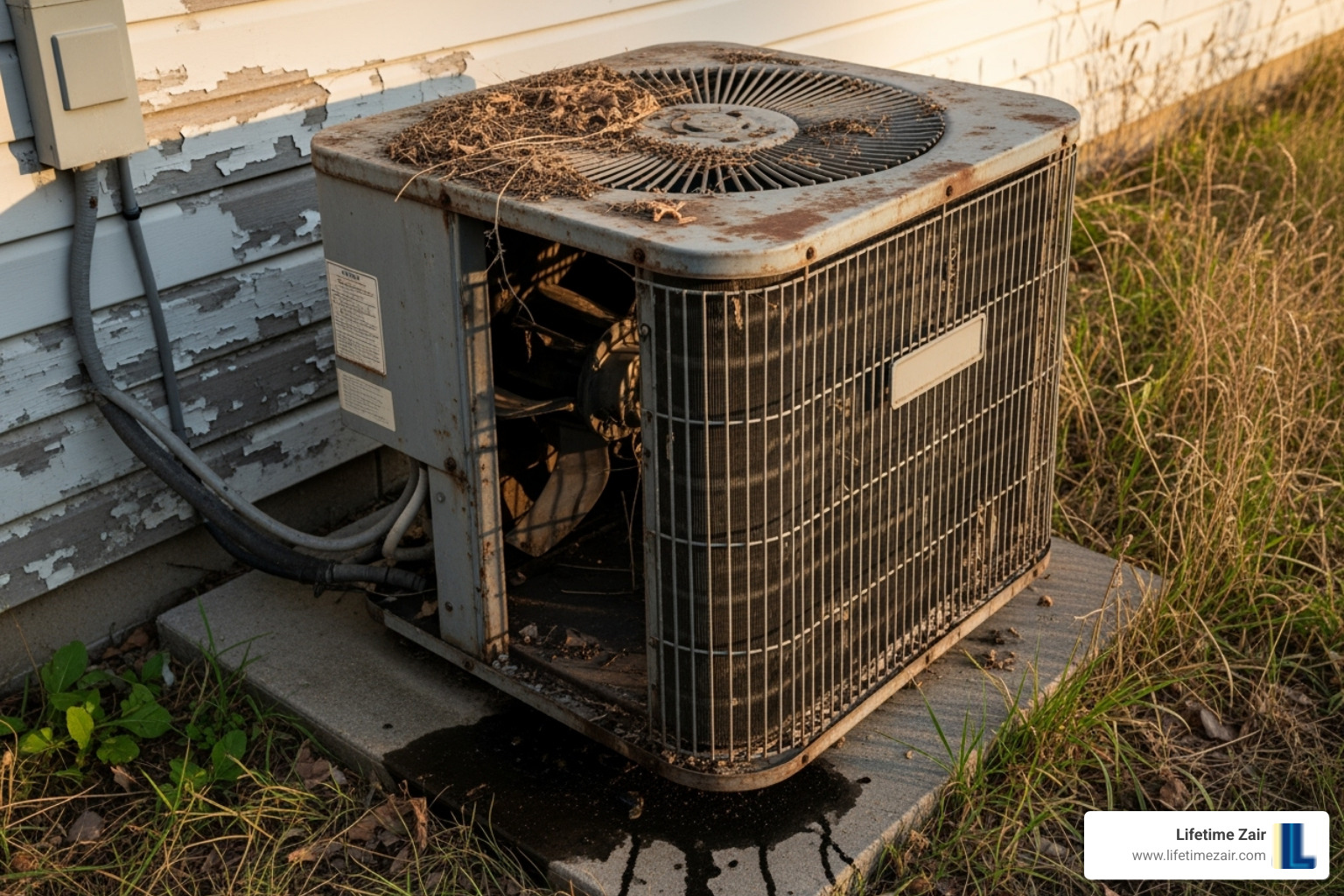
Age is a critical factor. If your unit is 10-15 years old or more, it’s likely nearing the end of its effective lifespan. Older systems work harder and consume more energy to provide the same level of cooling.
Frequent repairs are another major red flag. While a single repair is expected, mounting repair bills that spiral out of control are a sign that a replacement is a better long-term investment. A useful guideline is the “$5,000 rule”: multiply your unit’s age by the estimated repair cost. If the number is $5,000 or higher, replacement often makes more financial sense.
Rising energy bills that don’t correspond to your usage habits are a clear indicator of declining efficiency. As a system ages, it struggles to keep up and consumes more electricity, leading to spikes in monthly costs.
Finally, the type of refrigerant is a compelling reason for AC unit replacement. Systems running on outdated R-22 refrigerant (Freon) are a growing liability. Since R-22 was phased out in 2020, it has become increasingly difficult and expensive to source for repairs.
Making this decision doesn’t have to be overwhelming. Our guide on the Top 6 Reasons Why You Need to Replace Your AC Unit breaks down these warning signs in more detail. For a deeper financial analysis, see When to Replace Your HVAC Unit Instead of Repairing It. The goal is to help you make the smartest decision for your home and budget.
Decoding the Full Cost of an AC Unit Replacement
Once you decide on an AC unit replacement, the next question is about cost. The total investment for a residential replacement varies, typically ranging from several thousand dollars to well into five figures. This wide range reflects that every home is unique, with costs depending on the unit’s type and size, local labor rates, and any necessary modifications.
The Price of the Unit Itself
The equipment is the core of your AC unit replacement cost. You’re not just buying “an air conditioner” but choosing from a spectrum of options.
The first choice is between central air conditioning and ductless mini-split systems. Central air uses existing ductwork to cool the entire home, while ductless systems use individual indoor units for zoned cooling.
Here’s how these two popular options stack up:
| Feature | Central Air Conditioning | Ductless Mini-Split System |
|---|---|---|
| Pros | – Whole-home cooling | – Zoned cooling (individual room control) |
| – Integrates with existing ductwork | – No ductwork required (ideal for additions, older homes) | |
| – Less visible (outdoor unit, indoor vents) | – Highly energy-efficient for specific zones | |
| – Consistent temperature throughout | – Can be installed quickly (single zone in a few hours) | |
| Cons | – Requires ductwork (can be costly to install/modify) | – Higher upfront cost for multiple zones |
| – Less precise temperature control per room | – Indoor units are visible on walls | |
| – Installation can be more complex | – Limited whole-home cooling compared to central air |
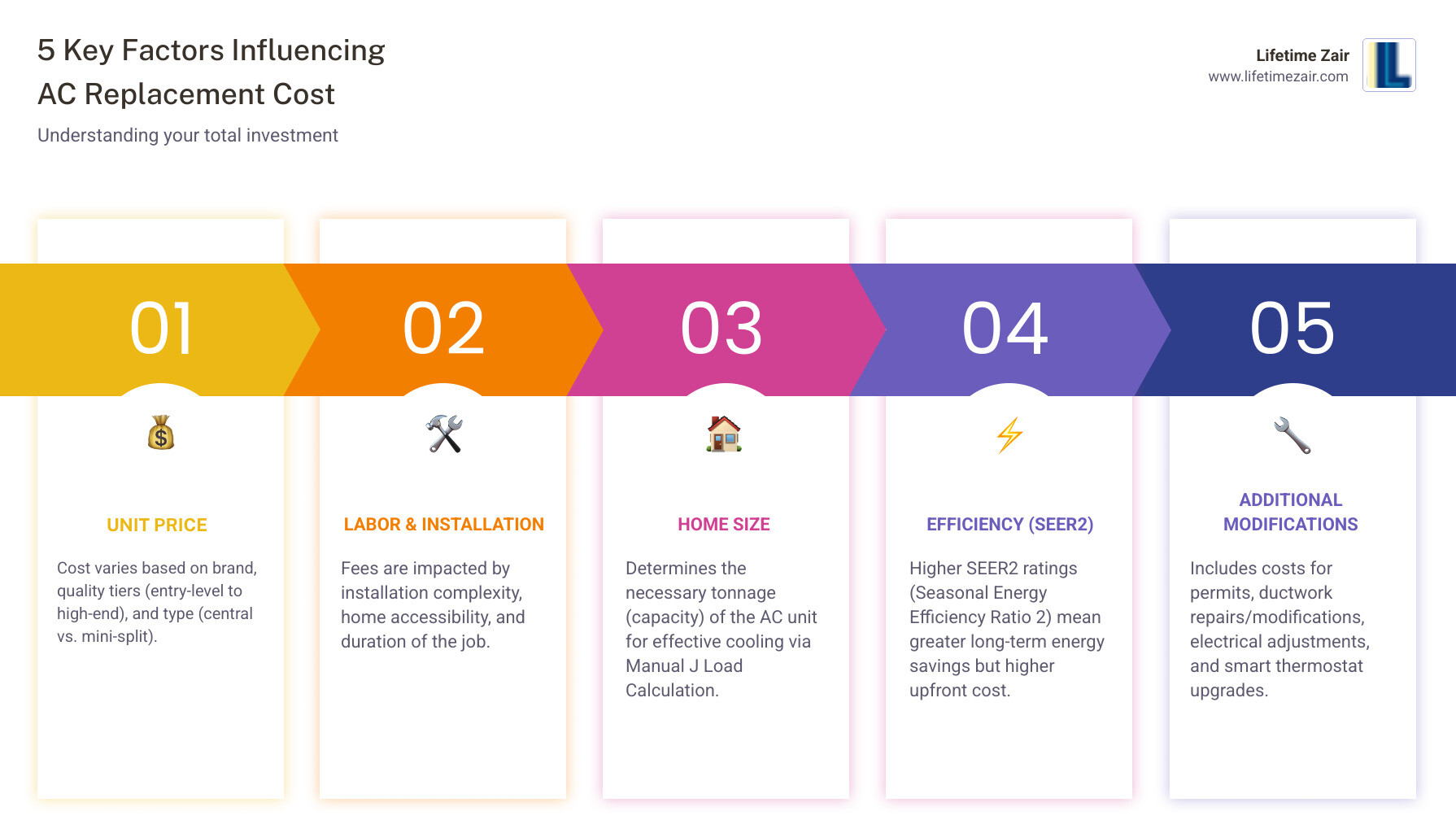
Beyond system type, you’ll choose from different quality tiers. Entry-level units offer basic, reliable cooling. Mid-range systems provide a balance of better efficiency, features like two-stage compression, and stronger warranties. High-end units deliver premium performance with the highest SEER2 ratings, variable-speed technology, and smart home integration.
To help you steer these choices, see our guide on choosing [The Best HVAC System for Your Home](https://www.lifetimezair.com/the-best-hvac-system-for-your-home/).
Factoring in Labor and Installation Fees
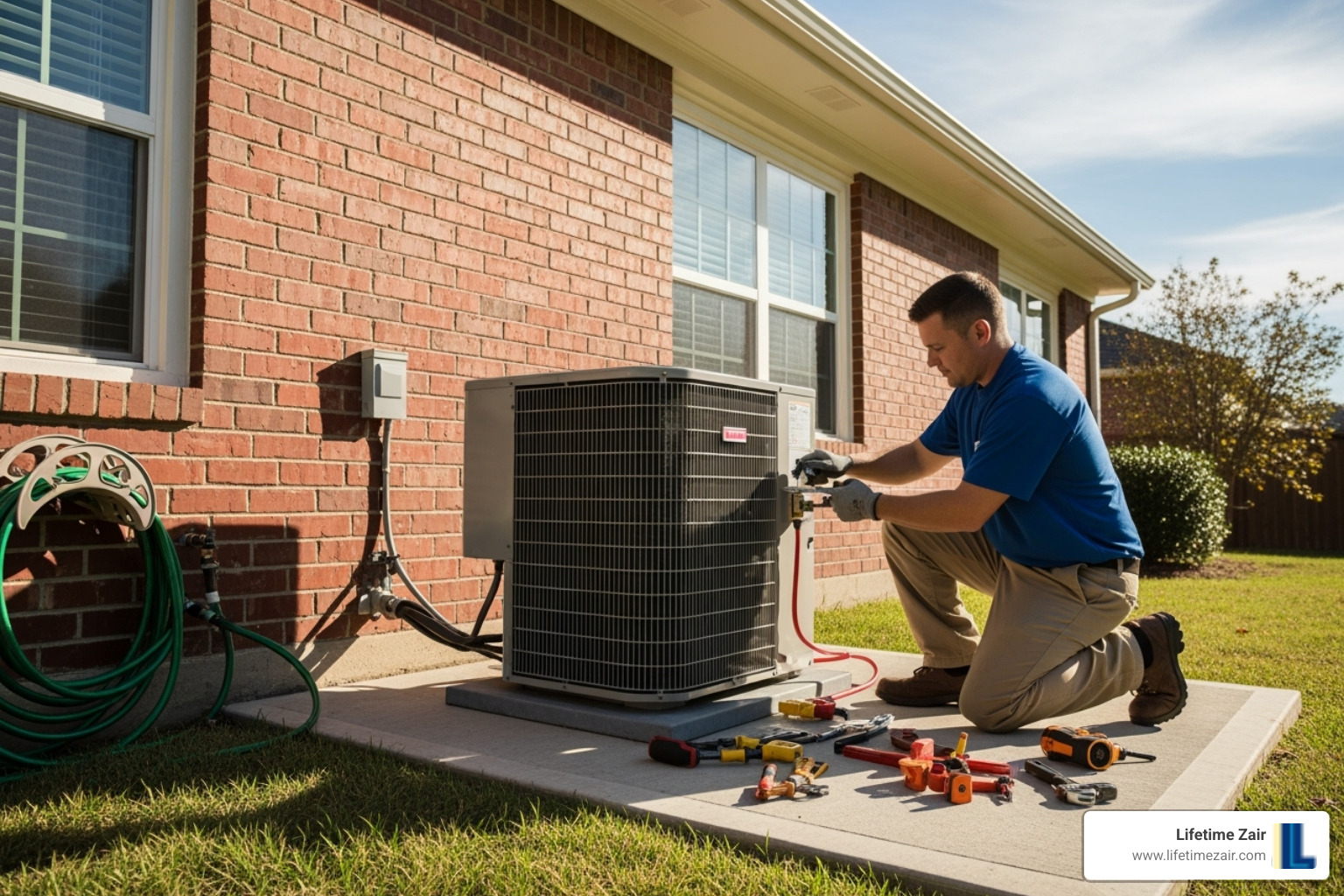
A significant portion of your AC unit replacement cost is for professional installation. This skilled process includes safely disconnecting the old system, installing the new equipment, connecting electrical and refrigerant lines, and testing for optimal performance.
Installation costs are influenced by complexity (a simple swap vs. a job needing major modifications) and home accessibility (the location of indoor and outdoor units). Proper installation is critical; even the best unit will underperform if installed incorrectly. For more insights, read our guide on how to [Ensure Smooth Air Conditioning Installation](https://www.lifetimezair.com/ensure-smooth-air-conditioning-installation/).
Hidden and Additional Costs of an AC unit replacement
Budgeting for an AC unit replacement should include potential additional expenses to avoid surprises:
- Permits and Inspections: Required in most areas to ensure the installation meets local safety and building codes.
- Ductwork Modifications: May be needed if existing ducts are old, leaky, or improperly sized for the new system.
- Smart Thermostat Upgrades: Optional but can improve comfort and energy savings. May require new wiring.
- Electrical Adjustments: Necessary if the new AC has different power requirements, potentially involving panel or wiring upgrades.
- Line Set Protection: A
[line-set positive seal system](https://www.airexmfg.com/prosystem/)can protect the vital copper refrigerant tubing from damage. - Condensate Drainage Systems: A condensate pump may be needed to properly remove water produced by the AC, preventing potential water damage.
Key Technical Factors That Impact Your Choice and Cost
Understanding the technical specifications of your AC unit replacement is key to achieving long-term comfort and savings. These details help you avoid the frustration of high energy bills or a system that can’t handle summer heat.
Understanding Size, Capacity, and Efficiency (Tonnage & SEER2)
In HVAC terms, “size” refers to cooling capacity, measured in “tons” (one ton equals 12,000 BTUs). Most homes require a system between 1.5 and 5 tons.
Proper sizing is critical for an AC unit replacement. An undersized unit will run constantly without reaching the target temperature, causing premature wear. An oversized unit will cool the space too quickly, failing to remove humidity and leading to a clammy feeling. This frequent cycling also puts stress on the system’s components.
To ensure correct sizing, a professional should perform a Manual J Load Calculation. This detailed analysis considers your home’s insulation, windows, ceiling height, local climate, and more to determine the precise cooling load.
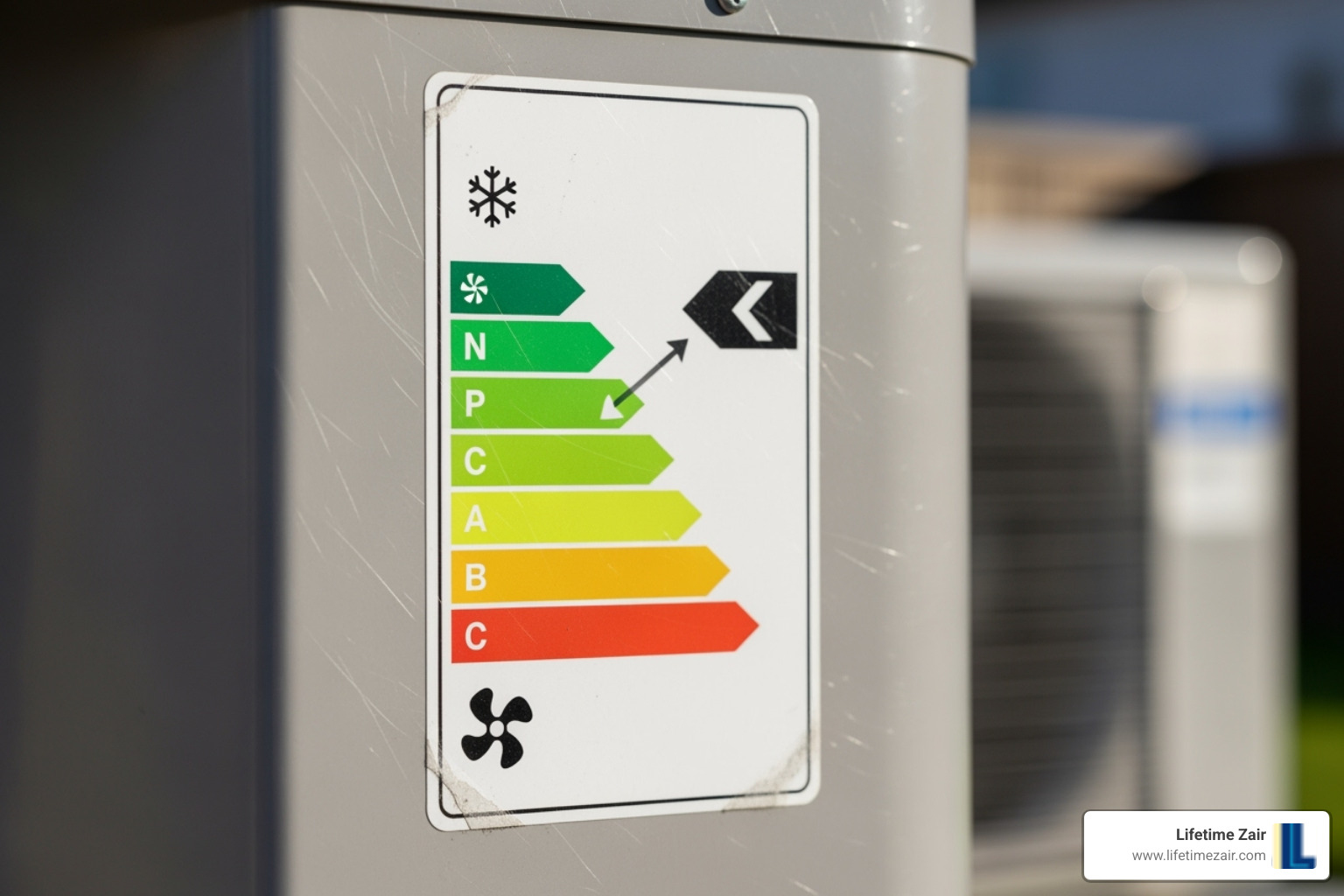
Efficiency is measured by the SEER2 (Seasonal Energy Efficiency Ratio 2) rating. Like a car’s MPG, a higher SEER2 rating means greater efficiency and lower electricity bills. While new units in the Midwest must meet a minimum 13.4 SEER2 rating, investing in a higher rating can provide significant long-term savings. The Energy Star Guide offers more information on potential savings.
The Role of Refrigerant and System Matching for your AC unit replacement
The refrigerant is the substance that transfers heat out of your home. The type of refrigerant your system uses has major cost implications.
Systems with R-22 refrigerant (Freon) are obsolete. Production was banned in 2020, making repairs that require a refrigerant recharge extremely expensive. Modern systems primarily use R-410A, which will be serviceable for years. The newest, most environmentally friendly option is R-454B, which future-proofs your investment.
Crucially, modern AC systems are sold as matched systems, meaning the outdoor condenser and indoor evaporator coil are engineered to work together. Mixing components from different systems or manufacturers can void warranties, reduce efficiency, and shorten the unit’s lifespan. For optimal performance, the entire system—indoor and outdoor units—should be replaced simultaneously. This is especially true if your furnace is also old. Our guide on Signs You Need a Furnace Repair can help you decide if a dual replacement is right for you.
Smart Strategies to Lower Your AC Replacement Bill
An AC unit replacement is a significant expense, but you can make it more affordable with strategic planning and by taking advantage of available savings.
Tapping into Rebates, Tax Credits, and Financing
Incentives for energy-efficient upgrades can significantly lower your out-of-pocket cost. Look for these opportunities:
- Manufacturer Rebates: HVAC manufacturers often offer cash-back deals on high-efficiency units, especially during the off-season. Ask your contractor about current promotions.
- Federal Tax Credits: The government offers tax credits for installing qualifying high-efficiency equipment. A credit directly reduces your tax liability, offering dollar-for-dollar savings. Check official
federal tax creditresources for current eligibility. - Local Utility Programs: Many power companies provide their own rebates to customers who upgrade to energy-efficient systems. Contact your local utility to see what’s available.
- HVAC Financing: To make the cost more manageable, we offer flexible financing solutions that allow you to pay for your AC unit replacement over time. Exploring your eligibility won’t impact your credit score.
Timing Your Purchase and Getting Quotes
Timing your purchase can lead to significant savings. The best time for an AC unit replacement is during the off-season (fall, winter, or early spring). Demand is lower, so contractors often have more availability and may offer better pricing to keep their crews busy. Planning ahead allows you to avoid the rush and higher prices of a mid-summer emergency replacement. Our article [Is It Good to Purchase a New AC in the Fall?](https://www.lifetimezair.com/is-it-good-to-purchase-a-new-ac-in-the-fall/) explains these benefits in more detail.
Getting at least three detailed quotes from reputable contractors is essential. This allows you to compare not just the price but the total value, including equipment quality, warranty, and the contractor’s reputation. When vetting contractors, look for:
- Experience and Certifications (e.g., NATE-certified technicians)
- Positive Customer Reviews
- Transparent, Written Estimates
- Strong Service Guarantees and Warranties
Combining smart timing with thorough research helps make your AC unit replacement a more affordable investment.
Frequently Asked Questions about AC Replacement
It’s natural to have questions when considering a major investment like an AC unit replacement. Here are answers to some of the most common ones we hear from homeowners.
How much does it cost to replace an AC unit?
The cost for a residential AC unit replacement typically ranges from $5,500 to $17,000. This wide range accounts for everything from a basic replacement to a premium, high-efficiency system. Your final cost will depend on several factors, including the unit’s size (tonnage), efficiency rating (SEER2), brand, and any required modifications to your home’s ductwork or electrical systems. The price includes both the equipment and professional installation.
How long does a typical AC installation take?
Most standard AC unit replacement projects can be completed in 4 to 8 hours. If the job is a straightforward swap of old equipment for new, our technicians can often have the system running in a single day. However, more complex installations that involve significant ductwork, electrical upgrades, or other modifications may extend the timeline. We always provide a clear, upfront estimate of the time required.
Can I replace just the outside AC unit?
We strongly advise against replacing only the outdoor unit. Air conditioning systems are engineered as “matched systems,” where the indoor evaporator coil and the outdoor condenser are designed to work together in harmony. Mixing a new outdoor unit with an old indoor coil can lead to several problems:
- Reduced Efficiency: The system won’t achieve the efficiency rating you paid for, resulting in higher energy bills.
- Voided Warranty: Manufacturers typically void the warranty if the components are not part of a matched set.
- Premature Failure: The mismatch can cause extra strain on both the new and old components, leading to a shorter system lifespan.
For optimal performance, efficiency, and warranty protection, replacing both the indoor and outdoor units together is the best practice.
Conclusion: Investing in Your Home’s Comfort
An AC unit replacement is more than a technical upgrade; it’s an investment in your family’s comfort and well-being. We’ve covered how to recognize when it’s time for a new system, understand the costs, steer technical choices, and find ways to save.
The long-term value of a new AC system is significant. Modern, energy-efficient units provide consistent cooling, improve indoor air quality, and lower monthly energy bills. With a lifespan of 15-20 years, a quality system is a worthwhile investment.
Professional installation is crucial. Even the best unit will fail to deliver on its promise of efficiency and longevity if not installed correctly. At Lifetime Zair, our expert technicians ensure your new system operates at peak performance from day one.
We understand that an AC unit replacement is a major expense. That’s why we offer financing options and promotions to make home comfort more accessible. Whether you’re facing an emergency replacement or planning for the future, our team is here to help.
Ready to enjoy the peace of mind that comes with a reliable, efficient cooling system? Contact us for your AC installation in Dallas, TX today, and let’s find the perfect solution for your home.