Why Understanding AC Replacement Costs Matters for Your Home
How much to replace air conditioner systems varies widely, but understanding the investment upfront helps you make smart decisions for your family’s comfort and budget.
Quick Answer – AC Replacement Cost Ranges:
- Central AC Systems: $5,500 – $16,000 (including installation)
- Ductless Mini-Split Systems: $2,000 – $13,000 (including installation)
- Average Total Investment: Around $8,500 for most homeowners
When your AC unit fails or repair costs mount, replacement becomes a significant financial decision. The total cost isn’t just the unit price; it’s a combination of factors. The size and efficiency of the new system, installation complexity, your home’s existing infrastructure, and even the time of year all influence your total investment.
Understanding these costs helps you budget properly and avoid surprises. Whether you’re facing an unexpected breakdown or planning for an aging system, knowing what to expect puts you in control.
The Bottom Line: Average AC Replacement Costs
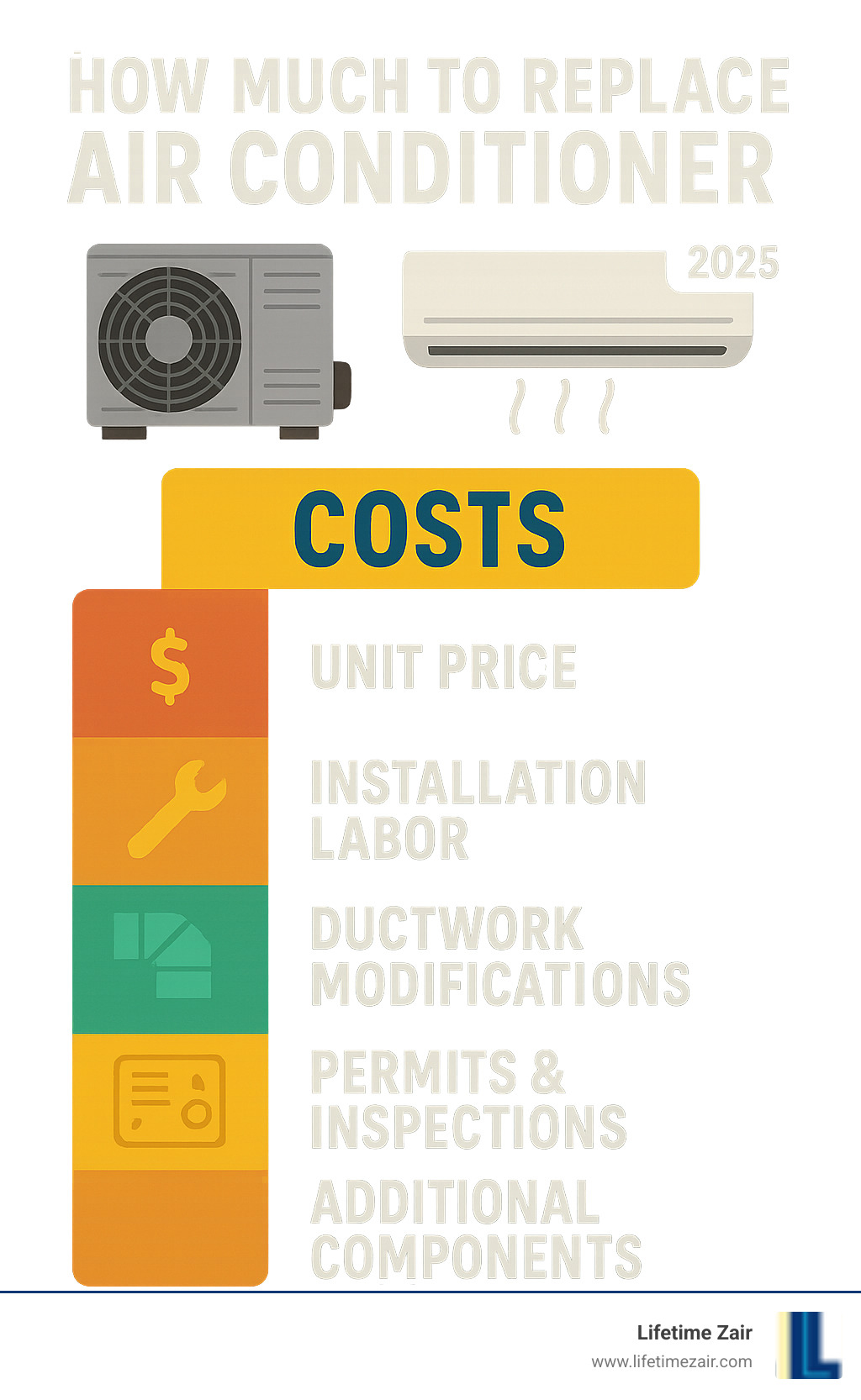
When homeowners ask how much to replace air conditioner systems, the answer varies based on a home’s unique needs. Nationally, most homeowners invest around $8,500 for a complete AC replacement. For central air conditioning with professional installation, the range is typically $5,500 to $16,000. This spread reflects the many variables that influence your final cost.
Central air is a popular choice for whole-home cooling, especially with existing ductwork. For homes without ducts or those wanting targeted cooling, ductless mini-split systems are an excellent alternative.
| System Type | Average Replacement Cost (Including Installation) |
|---|---|
| Central AC System | $5,500 – $16,000 |
| Ductless Mini-Split | $2,000 – $13,000 |
These are starting points; your actual costs may vary based on factors discussed in this guide.
When to Replace vs. Repair Your AC
Several clear indicators can help guide your choice between repairing or replacing your AC.
Age: Most central air conditioners last 10 to 15 years. Once your unit reaches this age, replacement is often the smarter financial move as older systems are less efficient and more prone to failure.
Frequent Repairs: If you’re constantly calling for service on different components, you’re essentially paying for a new system piece by piece. Replacement is a better long-term solution.
Rising Energy Bills: A sudden increase in your energy bills without a change in usage often signals an aging system that is working harder to cool your home. Modern units are far more efficient and can lead to long-term savings.
The 50% Rule: If a repair costs half or more than the price of a new unit, replacement makes more financial sense.
R-22 Refrigerant Phase-Out: If your unit uses R-22 refrigerant (Freon), replacement is highly recommended. The unit still uses R-22 freon which was phased out by the EPA in 2020. Recycled R-22 is expensive and difficult to find.
For a deeper dive, see our guide: When to Replace Your HVAC Unit Instead of Repairing It.
How Time of Year Affects Replacement Costs
Timing your AC replacement can significantly impact how much to replace air conditioner systems will cost.
Peak Season Pricing: During the hot summer months (April-September), demand for HVAC services skyrockets. This leads to higher labor rates, longer wait times, and less room for negotiation. Emergency replacements during a heatwave almost always cost more.
Off-Season Discounts: Late fall and early spring are the best times for AC replacement. Contractors have more availability and often offer competitive pricing, potentially saving you 10% to 15% on equipment and labor. You’ll also have more scheduling flexibility and can plan the installation without the stress of an emergency.
If your AC is aging, planning an off-season replacement can save you money and stress. Learn more here: Is It Good to Purchase a New AC in the Fall?.
Key Factors That Influence How Much to Replace an Air Conditioner

When determining how much to replace air conditioner systems will cost, several key factors come into play. The unit’s size, efficiency rating, brand, and labor rates all contribute to the total investment. Understanding these elements helps you make an informed decision.
How much to replace an air conditioner based on size and capacity?
Properly sizing an air conditioner is critical for comfort and efficiency. AC size is measured in “tons,” where one ton equals 12,000 BTUs (British thermal units) of cooling capacity per hour.
While a common rule of thumb is 1 ton for every 500 to 600 square feet, this is only a rough estimate. The industry standard for accurate sizing is a Manual J Load Calculation. This detailed assessment considers your home’s insulation, windows, ceiling height, climate, and more. The Department of Energy provides more information on AC load calculations.
Improper sizing causes problems. An undersized unit runs constantly, increasing energy bills and wear. An oversized unit cools too quickly to dehumidify the air, leaving your home feeling clammy and causing excessive wear from frequent cycling. Correct sizing ensures comfort, efficiency, and a long system lifespan.
The Role of Energy Efficiency (SEER Rating)
Energy efficiency is a major factor in the lifetime cost of your AC. SEER (Seasonal Energy Efficiency Ratio) is like a car’s MPG rating—a higher SEER means greater efficiency and lower monthly energy bills.
As of 2023, new SEER2 standards provide a more accurate measure of real-world performance. Minimum requirements vary by region; you can check the standards for your area at new “SEER2” ratings.
While higher-efficiency units have a higher upfront cost, they can reduce operating costs by 30% to 50% compared to older systems. These savings often offset the initial investment over the system’s 12 to 17-year lifespan.
Installation and Labor Fees
Professional installation is a significant portion of the total cost when determining how much to replace air conditioner systems, and it’s essential for safety, efficiency, and your warranty.
Installation complexity varies greatly. A simple replacement is less costly than one requiring ductwork modifications, electrical upgrades, or work in tight spaces like attics or crawl spaces. Certified technicians have the expertise to ensure your system is installed correctly for optimal performance, which is reflected in labor rates.
Professional installation also includes the removal and proper disposal of your old unit, adhering to environmental regulations for refrigerants. This investment ensures system longevity and peace of mind. For more on what drives costs, see our article: Why Are Air Conditioners So Expensive?.
Beyond the Unit: Additional Costs to Budget For
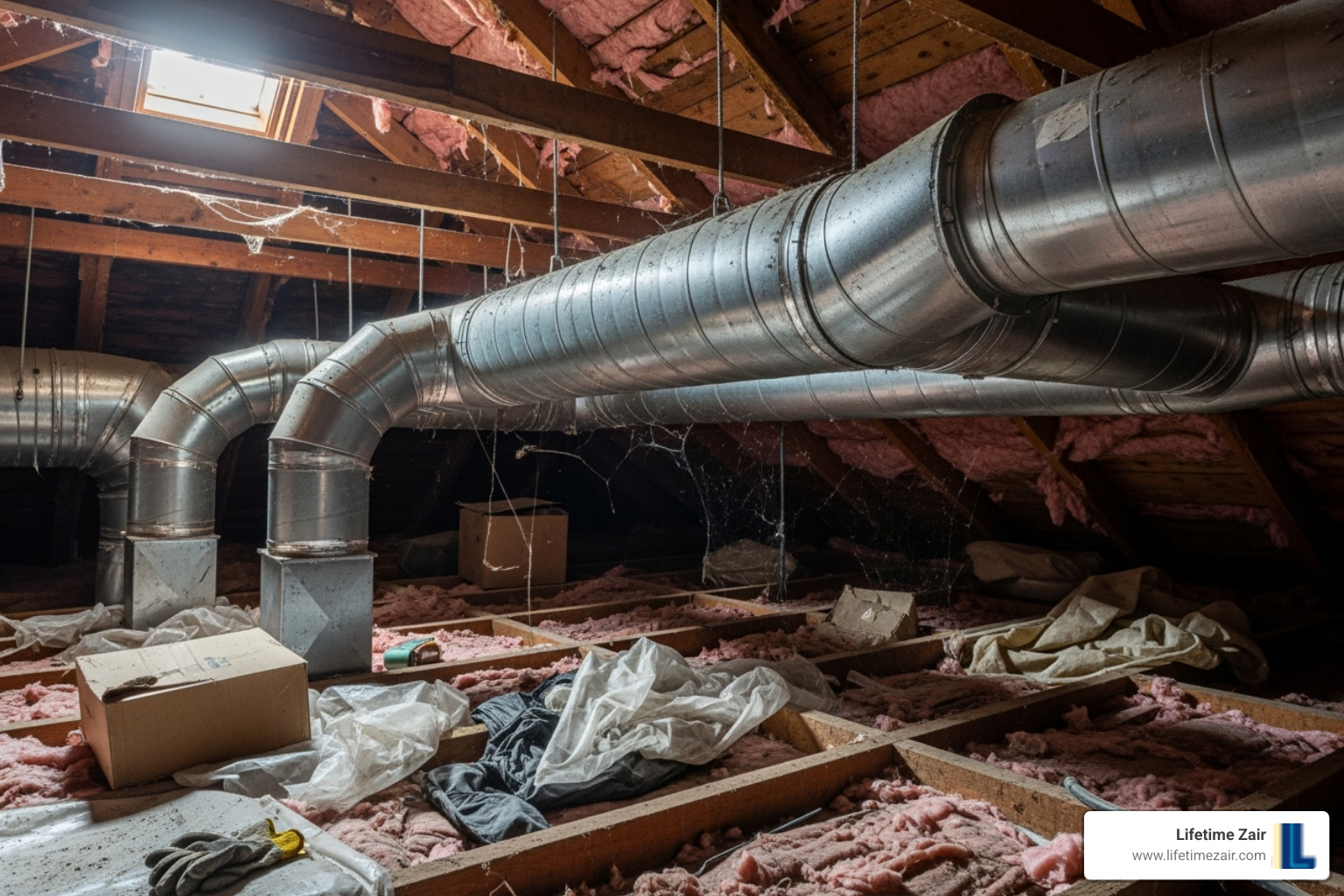
When budgeting for how much to replace air conditioner systems, the unit price is just one part of the total cost. Your home’s existing infrastructure can lead to additional expenses for compatibility or safety, which a thorough professional assessment will identify upfront.
How much do permits and ductwork add to the cost to replace an air conditioner?
Permits and ductwork are two common additional costs.
Permits are required by most municipalities for HVAC replacements to ensure the installation meets local safety and building codes. These fees typically add a few hundred dollars to the project but provide peace of mind.
Ductwork is crucial for your AC’s performance. Homes can lose 20% to 30% of conditioned air through leaks, according to Energy Star. A professional inspection will determine if your ducts need minor sealing and repairs or a full replacement. While sealing is relatively inexpensive, extensive repairs or replacement can add significantly to the project cost, especially in older homes with damaged or poorly designed duct systems.
Electrical Upgrades and Thermostats
Modern AC units may require updates to your home’s electrical system.
- Wiring and Circuit Breaker Upgrades: Older homes may need electrical updates to safely handle the power requirements of new, high-efficiency systems.
- Smart Thermostat Installation: While optional, smart thermostats are a popular upgrade. They learn your schedule and can be controlled remotely, often paying for themselves in energy savings.
- Condensate Pump: If your indoor unit is in a basement or location where gravity drainage isn’t possible, a condensate pump is needed to remove moisture and prevent water damage.
Is it better to replace the furnace at the same time?
This is a common question, and it’s often a smart financial move.
System Integration: Your AC and furnace share components like the blower motor and ductwork. A matched system, where both units are designed to work together, operates more efficiently and reliably.
Lifespan and Labor Savings: Furnaces and air conditioners have similar lifespans (15-20 years). If your furnace is also old, replacing both at once saves on labor costs compared to two separate installations.
Compatibility: A new, high-efficiency AC may not perform optimally if paired with an old, inefficient furnace or air handler. A matched system ensures you get the performance you paid for. For more on this, see our guide: Time for Furnace Replacement.
Smart Savings: How to Reduce Your AC Replacement Cost

No one likes sticker shock when finding out how much to replace air conditioner systems cost. Fortunately, with planning, you can make this investment more manageable without sacrificing quality.
Finding Rebates, Tax Credits, and Financing
Doing your homework can put money back in your pocket.
- Federal, State, and Local Incentives: The government often provides tax credits for high-efficiency systems. The DSIRE database is an excellent resource for finding state and local programs.
- Utility Company Rebates: Many utility providers offer rebates for installing energy-efficient equipment. Check what your provider offers using the Energy Star’s rebate finder.
- Manufacturer Promotions: Brands often offer rebates, especially during the off-season. We can help you time your purchase to take advantage of these deals.
- Financing Options: We offer flexible financing to turn a large expense into manageable monthly payments. This allows you to get the comfort you need now while spreading the cost over time, sometimes with promotional 0% APR.
The DIY Question: Can You Install It Yourself?
While DIY projects can be satisfying, central air conditioning installation is a job for certified professionals.
AC installation is complex, involving high-voltage electrical work, ductwork connections, and precise airflow calculations. A key reason for professional installation is refrigerant handling. It is illegal to handle refrigerants without proper Environmental Protection Agency (EPA) certification due to safety and environmental risks.
Furthermore, most manufacturers will void their warranties if the system is not installed by a licensed professional. An improper installation can lead to poor efficiency, premature system failure, and safety hazards. The cost to fix a failed DIY attempt often exceeds the cost of professional installation from the start. Investing in a professional ensures your system runs safely, efficiently, and is protected by its warranty.
Frequently Asked Questions about AC Replacement Costs
When researching how much to replace air conditioner systems cost, homeowners often have the same questions. Here are answers to the most common ones.
What is a reasonable price for a new air conditioner?
The answer depends on your needs and budget. Systems can be categorized into three tiers:
- Entry-level systems provide reliable, standard-efficiency cooling at the most affordable price point.
- Mid-range systems offer a balance of higher efficiency, better comfort features, and long-term energy savings.
- High-end systems deliver the best in performance with variable-speed technology, maximum efficiency, and whisper-quiet operation, often with longer warranties.
A “reasonable” price is one that fits your budget while meeting your comfort goals. We provide detailed quotes with a full cost breakdown so there are no surprises.
How long should an AC unit last in Texas?
While the national average AC lifespan is 12 to 17 years, the intense Texas heat means our units work harder. A well-maintained unit in the Dallas-Fort Worth area can still last 15 to 20 years. Annual maintenance is key to maximizing lifespan and efficiency in our demanding climate.
Signs that your AC is nearing the end of its life include reduced cooling performance, frequent repairs, and rising energy bills. For more details, read our guide: Signs That It’s Time to Upgrade Your Home’s HVAC System in Texas.
Does a new AC unit increase home value?
Yes, a new AC system is a valuable home improvement that adds value when it’s time to sell. Energy efficiency is a major selling point for Texas homebuyers, who are conscious of high summer cooling costs. A new system also provides peace of mind to buyers, assuring them they won’t face a costly replacement soon after moving in. This signals that the home is well-maintained and makes it more attractive on the market, justifying it as a smart investment.
Get a Clear Estimate for Your Home
Now that you understand the factors that influence how much to replace air conditioner systems cost, you can see why a generic online calculator isn’t enough. Every home is unique, and your AC replacement needs are too.
While national averages provide a helpful baseline, they can’t account for your home’s specific layout, ductwork, or electrical setup. A personalized quote from a professional is essential to determine the true cost. This involves an on-site evaluation of your home’s size, insulation, and infrastructure to match you with the right system.
We believe in full transparency. Our estimates break down every cost, from the unit and labor to permits and any necessary upgrades. This gives you the information you need to make the right decision for your family and budget without any commitment.
For expert advice and a detailed estimate custom to your Dallas-area home, contact the professionals at Lifetime Zair. We’ll help you steer all these considerations to find the perfect cooling solution. AC Replacement Dallas, TX.