When Your AC is Running But Not Producing Cool Air
When your AC not cooling becomes a reality on a scorching day, you’re facing one of the most frustrating home comfort issues. The unit hums away, electricity runs, but only warm air flows through your vents.
Quick diagnosis for AC not cooling:
- Check thermostat settings – Ensure it’s set to “COOL” mode and temperature is below room temp
- Inspect air filter – Replace if dirty or clogged (restricts airflow)
- Verify circuit breakers – Reset if tripped, but don’t reset repeatedly
- Clear blocked vents – Remove furniture or debris blocking airflow
- Check outdoor unit – Remove leaves, dirt, or obstructions around condenser
Most AC cooling problems stem from simple issues you can fix yourself. But some require professional help to avoid costly damage.
As one frustrated homeowner put it: “You’ve been running your AC all day and night and still feel like you’re living in an oven.” This scenario plays out in thousands of homes every summer.
The most common culprits include dirty air filters, frozen evaporator coils, refrigerant leaks, and electrical problems. A dirty air filter alone is the most frequent cause of AC freeze-up, while continuing to run a malfunctioning AC can strain the compressor and lead to more severe repairs.
Understanding why your AC isn’t cooling helps you take the right action quickly – whether that’s a simple filter change or calling for professional repair.
Simple DIY Troubleshooting Steps to Try First
When your AC not cooling leaves you sweating, don’t immediately reach for the phone to call a technician. Many cooling problems have surprisingly simple solutions that you can tackle yourself in just a few minutes. These basic troubleshooting steps often reveal quick fixes that can save you both time and money while getting your home comfortable again.
Think of this as detective work – we’re looking for clues that point to the most common culprits behind cooling problems. Most homeowners can handle these checks safely, and you might be amazed at how often the solution is simpler than you’d expect.
Check Your Thermostat Settings
Here’s a truth that might make you chuckle: some of our most frantic service calls turn out to be thermostat mix-ups. It happens to the best of us – kids playing with buttons, accidental bumps, or that helpful house guest who “adjusted” things while you were away.
Start with the basics. Make sure your thermostat is set to “COOL” mode rather than “HEAT” or “FAN ONLY.” Then verify that your target temperature is actually lower than what your home currently feels like. If you’re aiming for 78 degrees but your house is already 75, your system won’t kick on.
Check those thermostat batteries next. A dying battery can cause all sorts of strange behavior, from blank displays to erratic operation. Many homeowners don’t realize their thermostat needs fresh batteries until problems start.
Pay attention to your fan setting too. If it’s set to “ON” instead of “AUTO,” your fan runs constantly, circulating room-temperature air even when the cooling cycle isn’t active. This makes it seem like your system is working but not cooling. Switch it to “AUTO” so the fan only runs during actual cooling cycles.
Smart thermostats can be trickier, sometimes displaying error codes or experiencing programming glitches. If you’re dealing with thermostat troubles in our service area, our guide on AC thermostat problems in McKinney homes offers more detailed solutions.
Inspect the Air Filter and Vents
Your air filter might be small, but it plays a huge role in whether your AC not cooling problem gets solved today. Think of it as your system’s lungs – when it’s clogged with dust, pet hair, and debris, your entire system struggles to breathe properly.
A dirty air filter restricts airflow, which can cause your evaporator coil to freeze up. When that happens, your system can’t absorb heat from your home’s air, leaving you with warm air blowing from your vents.
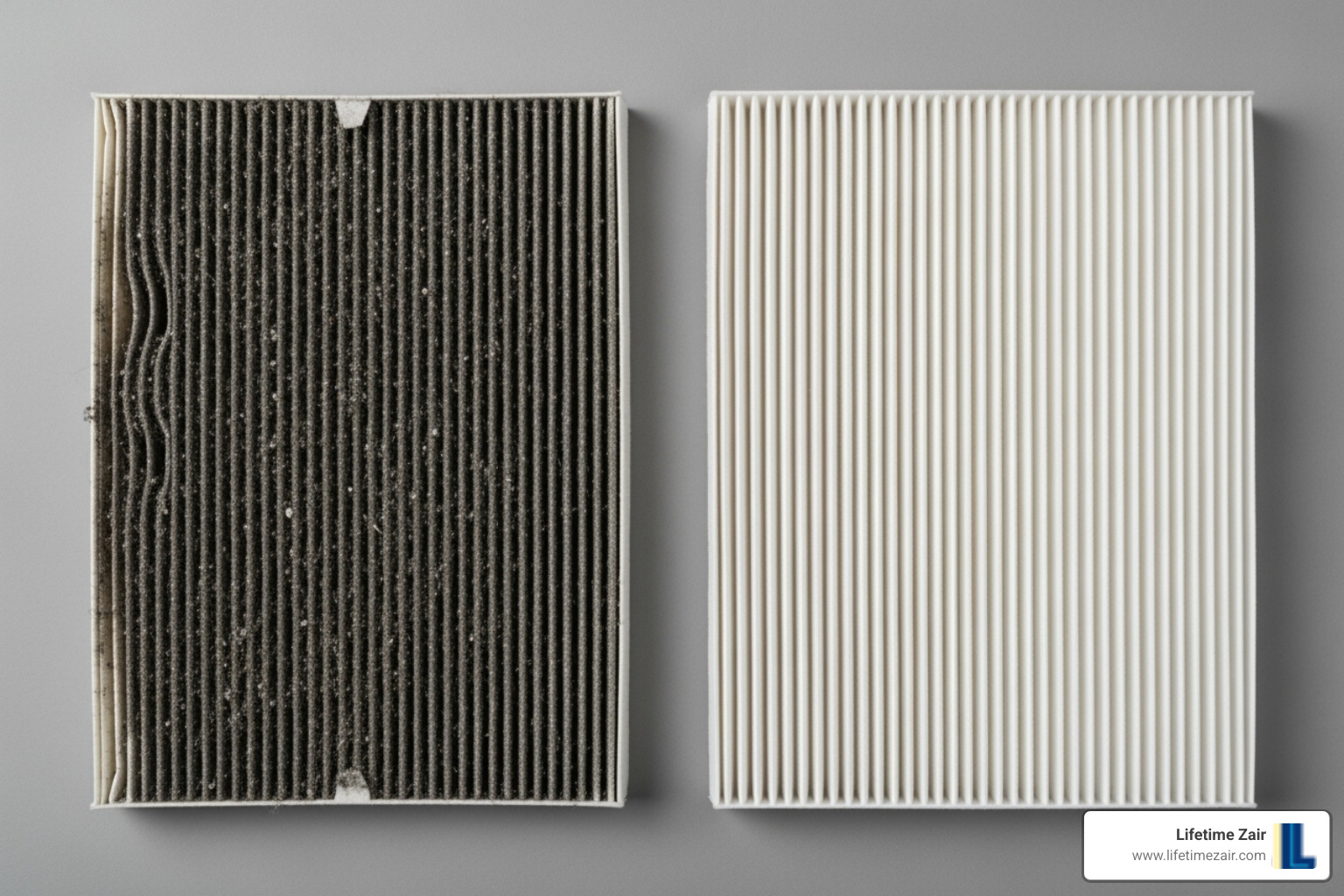
Pull out your filter and hold it up to the light. If you can’t see through it clearly, it’s time for a replacement. Change your filter every one to three months, depending on factors like pets, allergies, and how dusty your area gets.
While you’re at it, check your vents for blockages. Walk around your home and make sure furniture, curtains, or storage boxes aren’t blocking your supply or return vents. Even partially blocked vents can create hot spots and reduce your system’s efficiency. Move any furniture that’s sitting too close to vents – your AC needs clear paths to circulate air properly.
Reset the Circuit Breaker
Sometimes your AC just needs a fresh start, much like restarting your computer when it’s acting up. Your air conditioning system connects to dedicated circuit breakers in your electrical panel, and these can trip when the system experiences an overload or power surge.
Find your electrical panel – it’s usually in your garage, basement, or a utility closet. Look for breakers labeled for your indoor and outdoor AC units. If you find any in the “OFF” position or sitting in the middle position, that’s your culprit.
Flip the tripped breaker firmly to “ON” and wait about 5-10 minutes before trying to restart your AC. This gives your system time to reset properly.
Here’s an important safety note: if the breaker trips again immediately, don’t keep resetting it. This signals a serious electrical problem or major issue with your AC unit that could be dangerous. Leave the breaker off and call a professional instead.
For more comprehensive troubleshooting when your system won’t start at all, check out our AC won’t turn on troubleshooting tips. And if you need to completely reset your system, our guide on how to reset an air conditioning unit walks you through the process step by step.
Why Your AC is Not Cooling: Common Causes
When your simple DIY checks don’t solve the problem, it’s time to explore the deeper reasons behind your AC not cooling dilemma. Think of this as detective work – your AC is giving you clues about what’s going wrong inside. Understanding these common culprits will help you explain the situation clearly when you call for professional help, and more importantly, know when it’s time to stop troubleshooting and pick up the phone.
Airflow Problems: The Most Common Culprit for an AC Not Cooling
We’ve already talked about dirty air filters, but airflow problems run much deeper than that single component. When air can’t move freely through your system, it creates a domino effect of cooling issues that can leave you sweating.
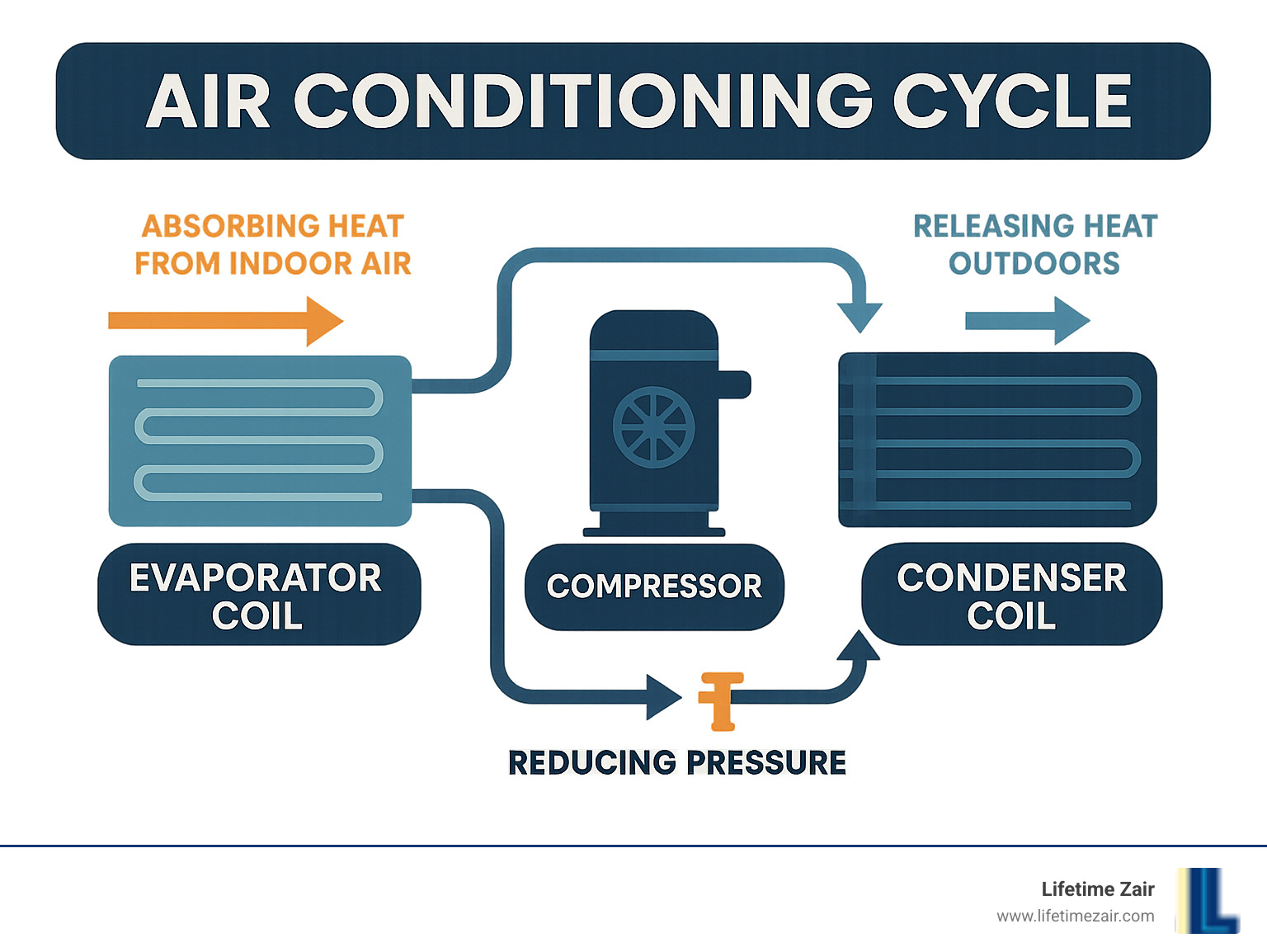
The most dramatic example of airflow gone wrong is a frozen evaporator coil. Picture this: your indoor coil is supposed to absorb heat from your home’s air, but when airflow gets restricted, the refrigerant inside gets too cold. Moisture from the air starts freezing on the coil’s surface, and before you know it, you’ve got a solid block of ice where your heat-absorbing coil should be. It’s like trying to breathe through a pillow – nothing’s getting through.
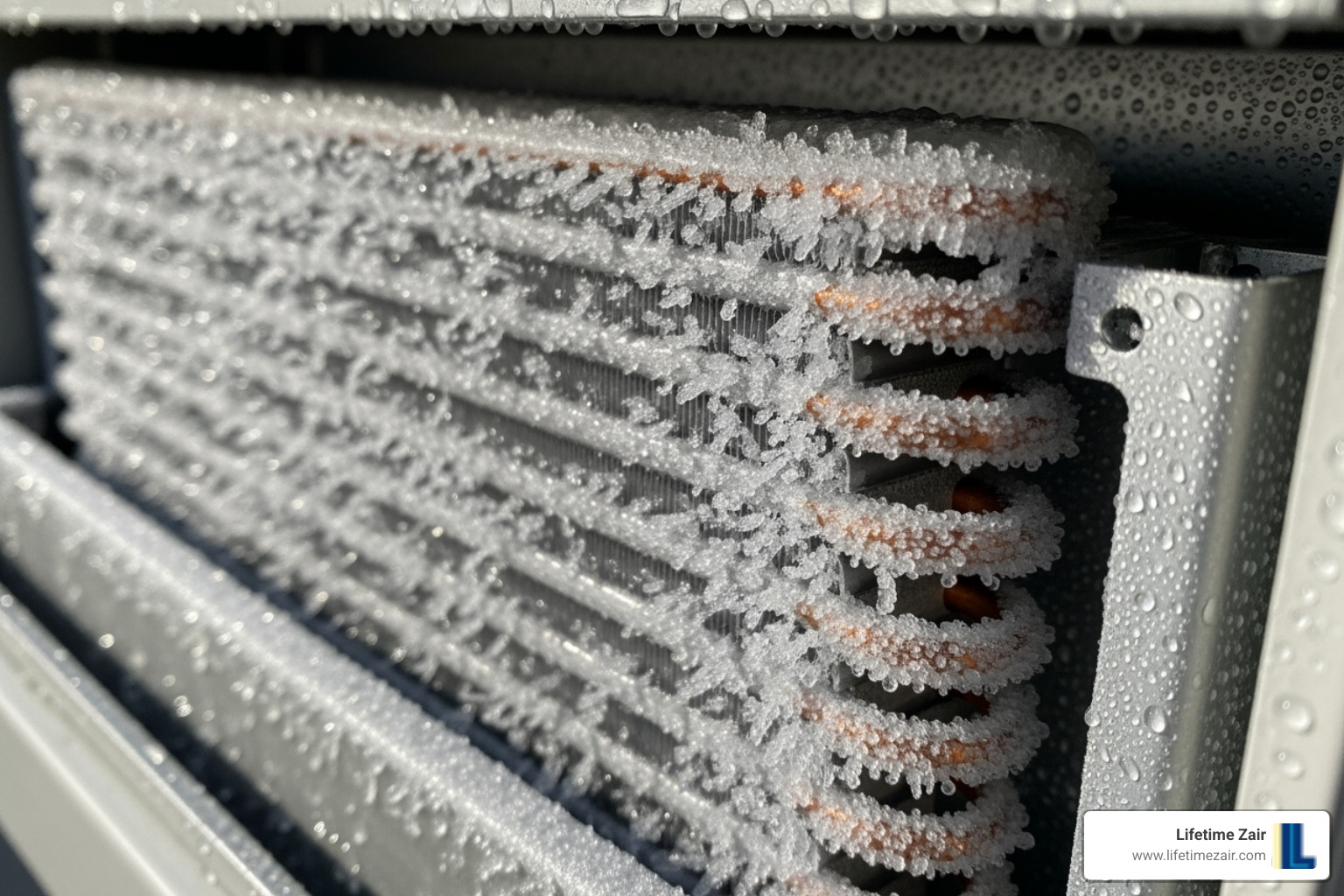
A dirty air filter is actually the most frequent cause of AC freeze-up. When you find ice on your coil, immediately turn off your AC at the thermostat. You can set the fan to “ON” to help speed up the melting process, but resist the urge to chip away at the ice – you’ll damage those delicate fins. Let nature take its course, which usually takes several hours. If the coil refreezes quickly after thawing, you’ve still got an underlying airflow problem that needs professional attention.
But freezing isn’t the only way a dirty evaporator coil can sabotage your cooling. Over time, these coils collect dust, grime, and even mold, creating an insulating layer that prevents proper heat absorption. It’s like wrapping your ice pack in a thick blanket – the cooling power is there, but it can’t do its job effectively.
Your blower motor might also be struggling to move air through the system. If this hardworking component starts failing, you’ll notice weak airflow from your vents, even when the system appears to be running normally.
Don’t overlook your condensate drain line either. As your AC removes humidity from the air, it creates water – sometimes up to 20 gallons per day! When this drain line gets clogged with algae or debris, water backs up and triggers a safety switch that shuts down your entire system to prevent water damage. No system operation means no cooling, period.
For a deeper dive into these airflow challenges, check out our guide on HVAC airflow problems things you should know. You can also learn more about frozen coil issues in our article about 3 reasons your air conditioner has frozen coils.
Refrigerant Issues and Component Failures
When your AC not cooling problem goes beyond airflow, you’re likely dealing with the heart and soul of your cooling system – the refrigerant and its supporting components. These issues require professional expertise, but understanding them helps you recognize the warning signs.
Refrigerant is the magic ingredient that makes cooling possible. It absorbs heat from inside your home and releases it outside, traveling in a closed loop that should never need refilling. If your refrigerant levels are low, you almost certainly have a refrigerant leak somewhere in the system. Listen for hissing sounds or bubbling noises when your AC runs – these are telltale signs of escaping refrigerant.
Low refrigerant means your system can’t properly transfer heat, leaving you with an AC that runs constantly but never quite gets your home comfortable. Simply adding more refrigerant without fixing the leak is like filling a bucket with holes – expensive and temporary.
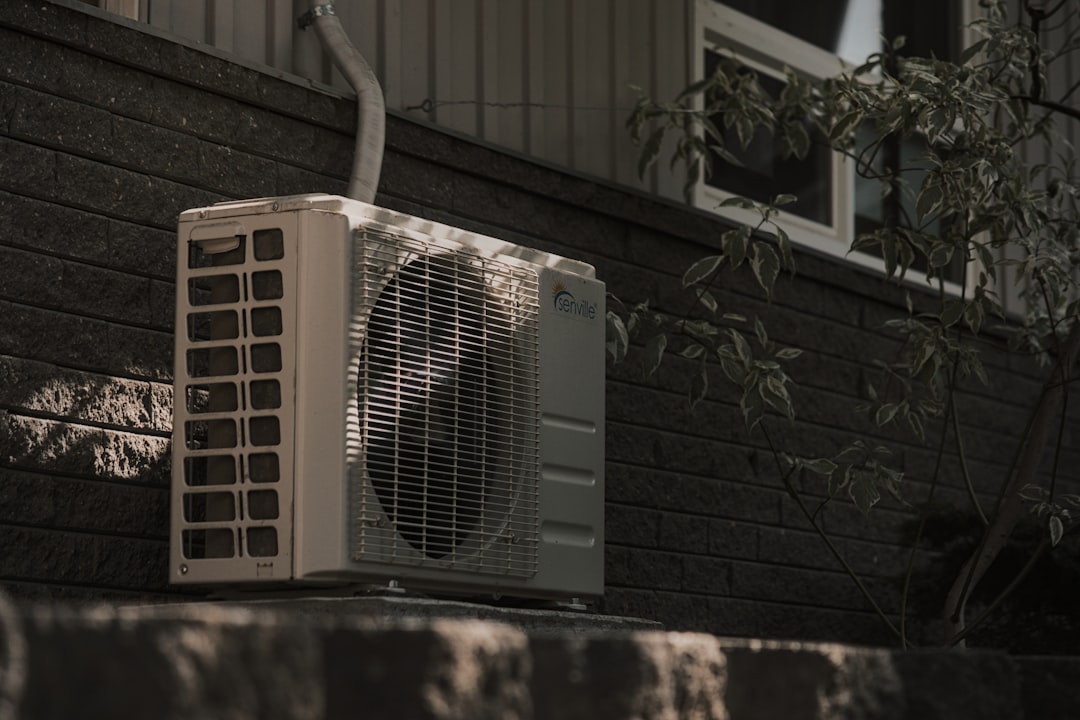
Your outdoor unit’s dirty condenser coils can also sabotage cooling performance. These coils need to release all that heat your AC pulled from inside your home. When they’re covered in dirt, leaves, or grass clippings, heat has nowhere to go. Your system works harder and harder, but that trapped heat keeps cycling back through, making cooling nearly impossible.
The faulty compressor represents the most serious component failure. Often called the heart of your AC system, this component pressurizes refrigerant and keeps it flowing through the cooling cycle. When it starts failing, you might hear grinding noises, notice the outdoor unit isn’t running, or find your AC blowing only room-temperature air. Compressor problems are complex and costly, which is why protecting this vital component with a compressor warranty makes good sense.
Two smaller but crucial electrical components can also cause cooling failures. A bad capacitor prevents your outdoor unit’s fan motor and compressor from starting properly – you might hear clicking sounds or see the fan running while the compressor stays silent. The bad contactor acts like a faulty light switch, preventing electrical current from reaching your outdoor unit at all.
System-Wide Problems: Ductwork and Sizing
Sometimes the problem isn’t with your AC unit itself, but with how it works within your home’s unique setup. Leaky ductwork and improper sizing can turn even the best AC system into an ineffective energy waster.
Think of your ductwork as the highway system for your cool air. When there are holes, gaps, or disconnections in these pathways, your precious cooled air escapes into attics, crawl spaces, or wall cavities before reaching your living areas. You’ll notice hot and cold spots throughout your home, higher energy bills, and an AC that runs constantly but never quite satisfies.
Poor insulation in your walls or attic compounds the problem by letting heat sneak back into your home as fast as your AC can remove it. Our guide on signs your AC ductwork needs repair can help you spot these issues before they drain your wallet.
AC sizing problems create their own unique cooling challenges. An undersized AC unit is like trying to cool a mansion with a window unit – it simply doesn’t have enough power. The system runs constantly without reaching your desired temperature, leading to sky-high energy bills and premature wear.
An oversized AC unit might seem better, but it creates a different problem called short cycling. The system cools your home too quickly, then shuts off before removing humidity from the air. You’ll feel clammy and uncomfortable even when the temperature seems right, and all that starting and stopping puts extra strain on your equipment.
Proper sizing involves complex calculations considering your home’s square footage, ceiling height, insulation quality, window efficiency, and local climate. Our article on how to tell if your air conditioner is correctly sized provides insights into this crucial aspect of home comfort.
When to Call a Professional for AC Repair
Let’s be honest – there’s a fine line between being a handy homeowner and becoming the star of a cautionary tale. While we love empowering you with DIY knowledge, some AC not cooling problems are like icebergs: what you see on the surface is just the beginning of a much bigger issue lurking beneath.
The moment you smell something burning, hear grinding noises that sound like your AC is auditioning for a horror movie, or see sparks flying, it’s time to step back and call in the cavalry. These aren’t “YouTube tutorial” moments – they’re “get a professional here now” situations.
Refrigerant issues are perhaps the biggest red flag for DIY danger. If you suspect a leak because of those telltale hissing sounds or your coils keep freezing even after you’ve done everything right, don’t even think about tackling this yourself. Refrigerant isn’t just expensive – it’s genuinely hazardous to handle without proper certification and equipment. Plus, simply adding more refrigerant without fixing the leak is like putting a band-aid on a burst pipe.
Electrical problems beyond a simple breaker reset are another clear signal to call for backup. Flipping a tripped breaker is fine, but if that same breaker keeps tripping, or you’re dealing with any burning smells or visible damage to wiring, you’re in professional territory. Electricity and DIY enthusiasm can be a dangerous combination.
When your AC not cooling involves persistent frozen coils that keep returning despite your best filter-changing, vent-clearing efforts, you’re likely dealing with low refrigerant, a failing blower motor, or another complex issue that requires diagnostic tools you probably don’t have sitting in your garage.
Those strange noises we mentioned earlier? They’re your AC’s way of crying for help. Grinding usually means bearings are going bad, banging could indicate loose components, and persistent clicking often points to electrical issues. Ignoring these sounds and continuing to run your system is like driving your car when it’s making that awful grinding noise – you’re just making an expensive problem even more expensive.
If your outdoor unit has gone completely silent even after you’ve checked all the obvious stuff, you’re likely looking at compressor, capacitor, or contactor problems. These components require specialized knowledge and tools to diagnose and replace safely.
Here’s the thing about aging systems: if your AC is pushing 10-15 years old and having frequent issues, a professional can help you make the smart financial decision between repair and replacement. Sometimes what seems like a simple fix is actually your system’s way of telling you it’s ready for retirement.
The bottom line? Complex diagnostics require more than determination and a screwdriver. Professional technicians have specialized tools that can pinpoint exactly what’s wrong, saving you time, money, and the frustration of guessing games.
Continuing to run a malfunctioning AC doesn’t just waste energy – it can strain your compressor and turn a moderate repair into a system replacement. When in doubt, it’s always better to call for help sooner rather than later. You can learn more about the importance of professional help in our guide on The need professional AC repair services and find tips for choosing the right technician in 7 tips for hiring an HVAC contractor.
Frequently Asked Questions about AC Cooling Issues
When you’re dealing with an AC not cooling situation, you probably have a million questions running through your mind. We get it – we’ve been helping homeowners in situations just like yours for years. Here are the questions we hear most often, along with straightforward answers that’ll help you understand what’s happening and what to do next.
Should I turn my AC off if it’s not cooling?
Yes, absolutely turn it off! We know it feels counterintuitive – when you’re hot, the last thing you want to do is shut off your air conditioner. But trust us on this one: continuing to run a malfunctioning AC is like driving your car with the engine overheating. You’re going to cause much bigger problems.
Here’s what happens when you keep running an AC not cooling properly. Your compressor – the heart of your system and one of the most expensive parts to replace – starts working overtime trying to do a job it simply can’t complete. It’s like asking someone to run a marathon while breathing through a straw. Eventually, something’s going to give, and compressor repairs can cost thousands.
If you’ve got frozen evaporator coils (which we talked about earlier), running the system just makes that ice thicker and thicker. You’re essentially turning your AC into a big, expensive ice maker that doesn’t cool your home. Plus, when all that ice melts, you could end up with water damage from the excess condensate.
And let’s talk about your wallet for a second. An AC that’s running but not cooling is basically just spinning your electric meter for no reason. You’re paying for electricity to accomplish absolutely nothing – no cool air, no comfort, just frustration and higher bills.
The good news? Turning off your system gives it a chance to reset and, if you have frozen coils, time to thaw out naturally. Sometimes, that simple reset combined with changing a dirty filter is all it takes to get things working again.
What is the typical lifespan of an AC unit?
Most air conditioning units will keep you cool for about 10 to 15 years if you treat them right. Think of your AC like a car – with regular maintenance and care, it’ll serve you well for over a decade. But just like that car, neglect it, and you’ll be shopping for a replacement much sooner than you’d like.
Several things affect how long your AC will last. Regular maintenance is the biggest factor – units that get annual professional tune-ups consistently outlast those that don’t. It’s like getting regular oil changes for your car. Usage patterns matter too. Here in Texas, where we run our ACs hard from April through October, units naturally work harder than those in milder climates.
The quality of the original installation plays a huge role as well. A properly sized unit that’s been installed correctly will hum along happily for years. But a unit that’s too big, too small, or poorly installed? That’s a recipe for problems and a shorter lifespan.
You’ll start seeing signs when your AC is getting tired. Frequent breakdowns become the norm instead of the exception. Your energy bills creep up even though you’re not using the system any differently. You might notice inconsistent cooling – some rooms feel like the Arctic while others feel like a sauna. Strange noises that weren’t there before become your new soundtrack.
If your unit is over 10 years old and facing a major repair, it’s often smarter financially to start fresh with a new system. You can dive deeper into this decision with our guide on When its time for AC replacement.
How often should I change my air filter?
Here’s the simple answer: check it every month, replace it every 1 to 3 months. But like most things in life, it’s not quite that simple. Your home is unique, and your filter replacement schedule should be too.
If you have pets, those furry family members are constantly shedding hair and dander that clogs up filters faster. Allergy sufferers in the house? You’ll want to change filters more frequently for better air quality and easier breathing. A house full of people generates more dust and debris than a quiet couple’s retreat.
Local conditions matter too. Live near a construction site, busy highway, or in an area with lots of pollen? Your filter is working overtime to keep that stuff out of your home. During our intense Texas summers, when your AC is running almost constantly, that filter is processing a lot more air than during milder months.
Here’s a simple test: pull out your filter after a month and hold it up to the light. If you can’t see through it clearly, it’s time for a new one. A dirty filter is the number one cause of AC not cooling problems, leading to frozen coils, reduced efficiency, and higher energy bills.
Think of it this way – your filter costs a few dollars, but the problems it prevents (like compressor damage or frozen coils) can cost hundreds or thousands. It’s the cheapest insurance policy you can buy for your HVAC system. Learn more about how this simple maintenance task can save you money in our article How can AC maintenance pay you back in energy savings?.
Get Your Cool Air Back with Professional Help
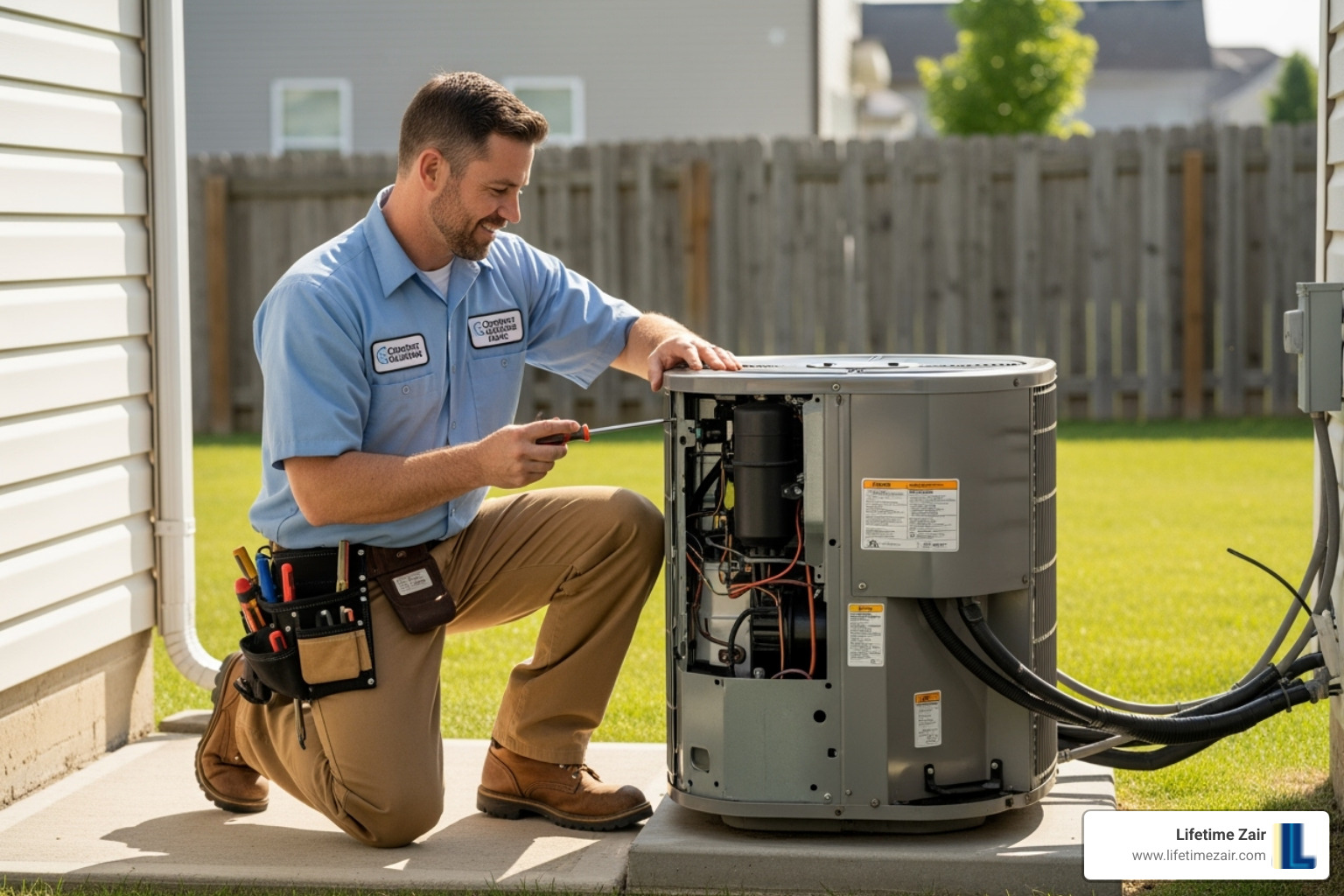
When your AC not cooling problem persists despite your best DIY efforts, there’s no shame in calling for backup. Sometimes the cavalry needs to ride in, and that’s exactly what we’re here for at Lifetime Zair. We’ve seen it all – from mysterious midnight breakdowns to units that decide to quit right before your in-laws visit for the weekend.
Our experienced technicians don’t just fix the immediate problem. We dig deeper to understand why your system failed in the first place. Maybe it’s a refrigerant leak that’s been slowly draining your system’s cooling power, or perhaps your compressor is showing signs of wear after years of faithful service. Whatever the culprit, we’ll explain it in plain English and give you options that make sense for your home and budget.
The most important lessons from your cooling crisis? Start with the simple stuff first – that thermostat setting check and filter replacement can save you a service call and get you back to comfort in minutes. But when those basic steps don’t work, recognizing the warning signs helps you avoid turning a manageable repair into a major system replacement.
Here’s what really makes the difference: regular maintenance. Think of it like taking your car in for oil changes. Those annual tune-ups catch small issues before they become big headaches, and consistent filter changes keep your system breathing easy. It’s much cheaper to prevent problems than to fix them after they’ve caused damage.
We know that unexpected AC repairs can strain your budget, especially during peak summer when you need your system most. That’s why we offer financing options to help spread the cost over time, making essential repairs manageable when you need them most.
Whether you’re in Addison, Dallas, Frisco, Plano, or any of our service areas across North Texas, we’re ready to restore your home’s comfort. Don’t suffer through another sweltering night hoping your AC will magically start working again.
Ready to get your cool air back? Schedule professional HVAC service in Dallas, TX and let our team solve your cooling puzzle once and for all.